
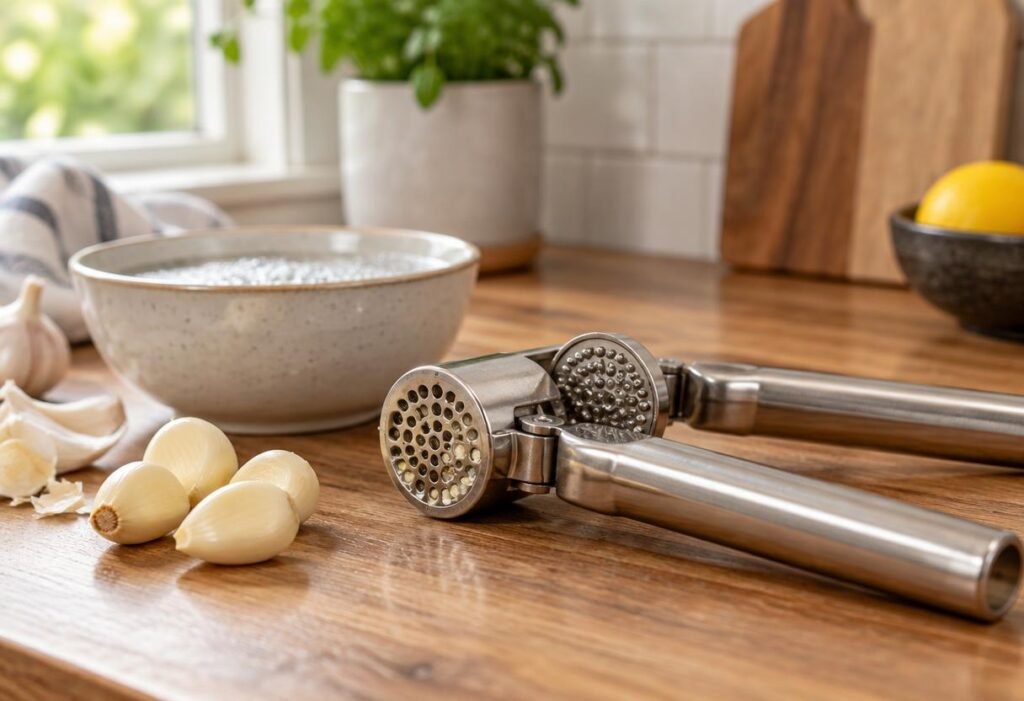
A garlic press is one of the fastest tools in the kitchen, right up until you have to wash it. Dried garlic sets like glue inside those tiny holes, and the smell lingers for days. The good news: learning how to clean a garlic press properly takes about five minutes, and once you have the routine down, it becomes a ten-second job after every use.
Table of Contents
- Why Garlic Presses Are So Hard to Clean
- How to Clean a Garlic Press Step by Step
- How to Remove Dried, Stuck-On Garlic
- Can You Put a Garlic Press in the Dishwasher?
- How to Get Rid of the Garlic Smell
- Garlic Press Cleaning by Material
- Garlic Press Cleaning FAQs
- The Bottom Line
Why Garlic Presses Are So Hard to Clean
Garlic is sticky. It contains natural sugars and oils that dry into a hard paste within minutes. The pressing chamber pushes pulp straight into dozens of small holes, so every clove leaves a little behind. If the press then sits in the sink overnight, that pulp hardens and can even start to corrode cheaper aluminum presses.
The fix is simple: clean it while the garlic is still wet, and use the right tool to clear the holes.
How to Clean a Garlic Press Step by Step
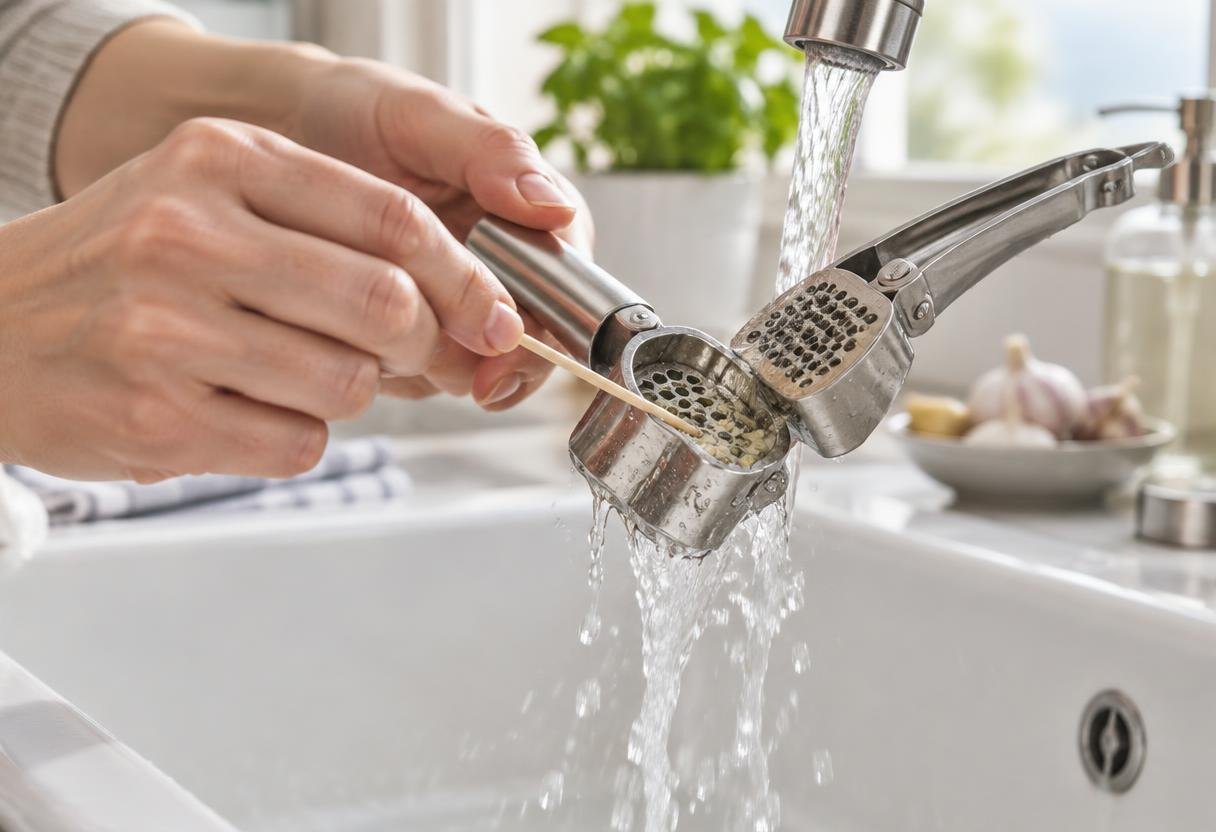
Here is exactly how to clean a garlic press after everyday use:
- Scrape out the leftover pulp. Open the press and use a butter knife or the tip of a spoon to scoop out the flattened garlic skin and pulp from the chamber.
- Rinse immediately under hot running water. Hold the chamber face-down under the tap so the water pushes through the holes from the inside out.
- Clear the holes. Close the press partway so the plunger pushes through the holes again. Many presses have a plunger with small pins built for exactly this. If yours doesn’t, use a toothpick or a wooden skewer on any blocked holes.
- Wash with dish soap. Add a drop of dish soap and scrub both the chamber and the plunger with a sponge.
- Rinse and dry completely. Dry it with a towel, then leave it open on a rack for a few minutes so the hinge dries fully.
Done straight after cooking, the whole routine takes under a minute. Washing kitchen tools in hot, soapy water after each use is also standard advice from FoodSafety.gov’s four steps to food safety.
How to Remove Dried, Stuck-On Garlic
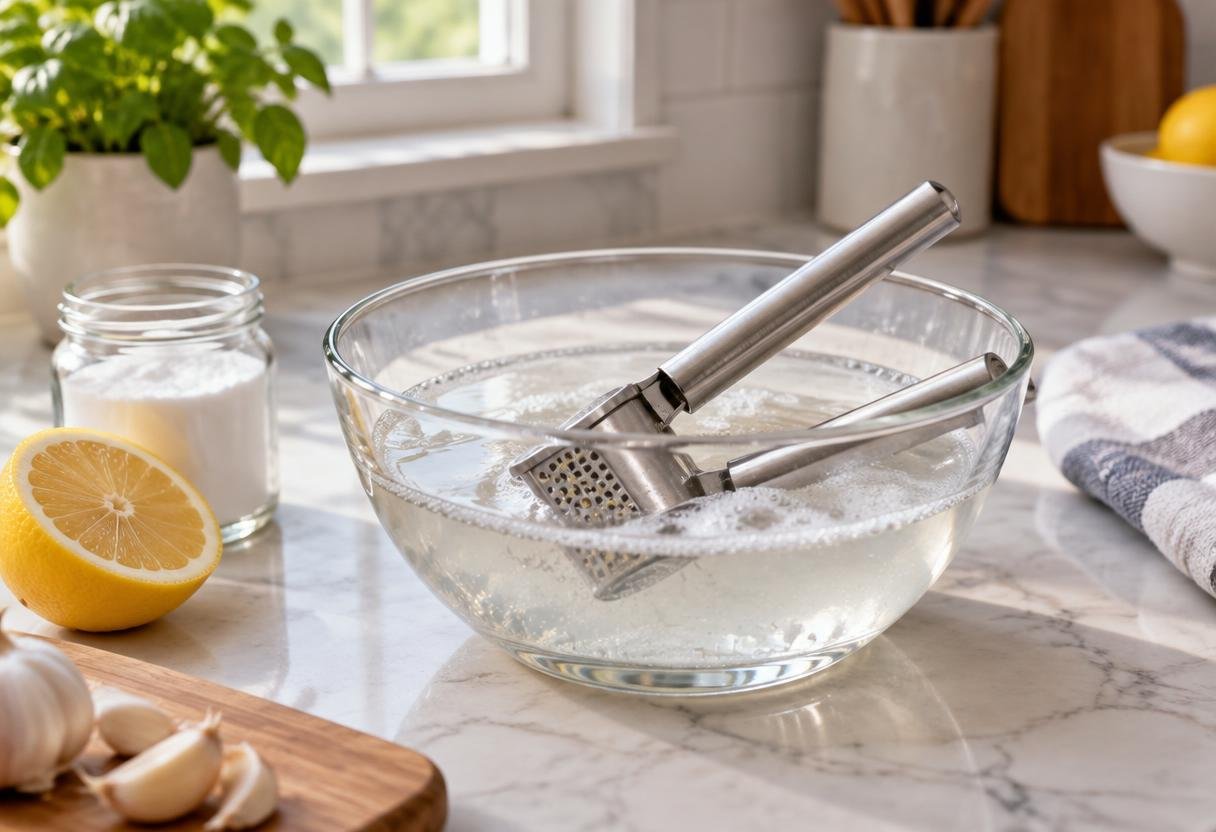
Forgot about it until the next day? Here’s how to clean a garlic press with dried-on residue. Don’t scrub hard and scratch the surface. Instead:
- Soak the open press in a bowl of hot, soapy water for 10–15 minutes to soften the dried garlic.
- Push a toothpick through each clogged hole from the back side.
- For stubborn residue, make a paste of baking soda and a little water, rub it over the chamber, wait a few minutes, then rinse.
- Repeat the soak if needed. Patience beats force here.
Knowing how to clean a garlic press after it has dried out is useful, but the real trick is not letting it get that far. Rinse it the moment you finish pressing.
Can You Put a Garlic Press in the Dishwasher?
It depends on the material. Most stainless steel garlic presses are dishwasher-safe, so check the packaging or the manufacturer’s instructions. Aluminum presses are a different story: dishwasher detergent can dull and darken aluminum, so hand washing is the safer option.
Whatever the material, the first step in how to clean a garlic press is the same: rinse the garlic out first. Dishwasher spray rarely reaches inside the tiny holes, and you’ll pull out a press that still has garlic baked into it.
How to Get Rid of the Garlic Smell
If the smell lingers after washing, rub the press with a cut lemon or soak it in a mix of equal parts white vinegar and water for 10 minutes, then rinse. Rubbing stainless steel under running water also helps remove garlic odor from your hands, a handy trick to know once you’ve learned how to clean a garlic press.
Shopping for a press that’s easier to clean in the first place? Look for a removable or swing-out basket. Our guide to the best garlic press under $20 highlights the models that clean up fastest. For more cleaning routines, see how to keep kitchen gadgets clean.
Garlic Press Cleaning by Material
How you clean a garlic press depends a lot on what it’s made of. Check your maker’s care instructions first, then use this as a quick guide:
| Press Material | Dishwasher? | Best Cleaning Method | Watch Out For |
|---|---|---|---|
| Stainless steel | Usually yes, if the maker allows | Rinse right away, then brush the holes | Dried garlic in the chamber corners |
| Aluminium | No | Hand wash in warm, soapy water | The dishwasher dulls and darkens aluminium |
| Zinc alloy or coated metal | No | Hand wash and dry immediately | Coating wear and rust spots |
| Plastic or plastic-hinged | Top rack, if labeled safe | Soak, then brush | Garlic smell and staining in the plastic |
Garlic Press Cleaning FAQs
How often should I clean my garlic press?
After every use. Garlic dries quickly, and a quick rinse right away saves you a long soak later.
What’s the fastest way to clean a garlic press?
Scrape out the pulp, run hot water through the chamber from the inside, and press the plunger through the holes. That’s usually enough for a press you clean immediately.
Why is my aluminum garlic press turning black?
Aluminum reacts with harsh dishwasher detergents. Wash aluminum presses by hand with mild dish soap and dry them right away.
Can I use a toothbrush to clean the holes?
You can, but a toothpick or wooden skewer is more precise for individual holes and won’t leave bristles behind.
The Bottom Line
Now you know how to clean a garlic press the easy way: scrape, rinse from the inside, clear the holes, wash and dry. Make it a habit right after cooking, and your press will stay clean, odor-free and working smoothly for years.