
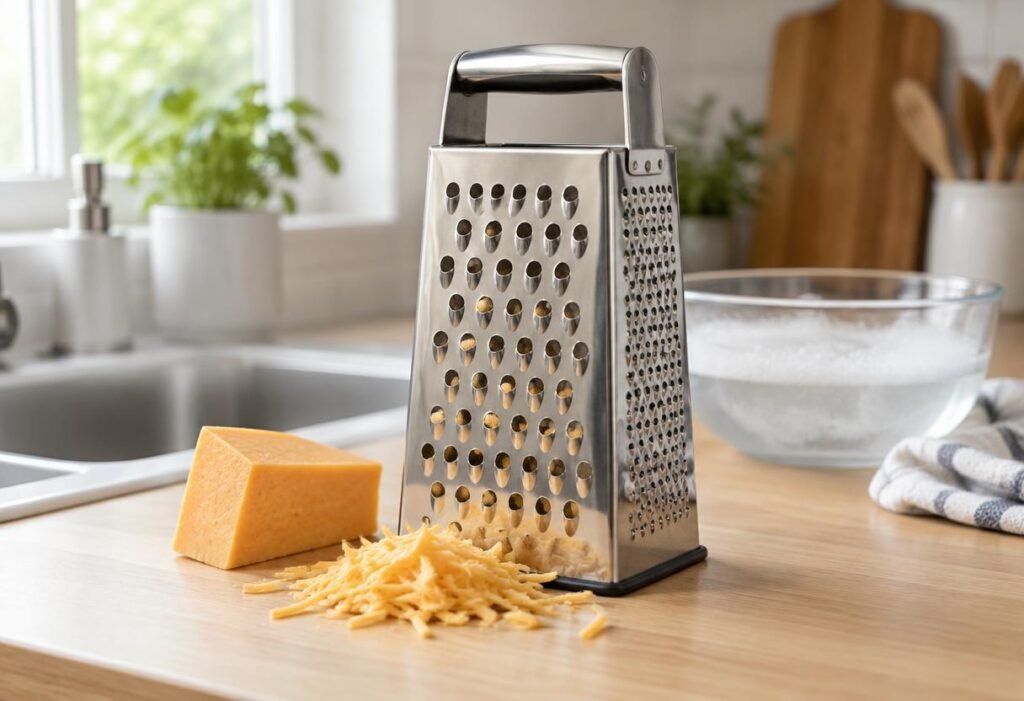
A cheese grater makes quick work of a block of cheddar, then turns into a small nightmare at the sink. Soft cheese packs into every hole, and the first swipe with a sponge leaves half of it stuck on the blades. The good news: once you know how to clean a cheese grater the right way, it takes about two minutes and your sponge survives.
Table of Contents
- Why Cheese Graters Are So Hard to Clean
- How to Clean a Cheese Grater Step by Step
- How to Remove Dried, Stuck-On Cheese
- Can a Cheese Grater Go in the Dishwasher?
- Preventing Rust and Dull Blades
- Troubleshooting Common Grater Problems
- Common Questions
- Bottom Line
Why Cheese Graters Are So Hard to Clean
Every hole on a grater is a tiny raised blade. That design shreds cheese beautifully, but it also shreds anything soft you rub against it, including sponges and dishcloths. Cheese is full of fat and protein, so leftover bits smear and harden as they cool. Leave the grater on the counter for an hour and those bits set like glue.
Two habits fix most of the problem: clean the grater soon after you use it, and wipe it in the right direction.
How to Clean a Cheese Grater Step by Step
Here is how to clean a cheese grater after everyday use:
- Tap out the loose shreds. Knock the grater gently against the edge of the cutting board or trash can to drop the bigger pieces.
- Rinse with cool water first. Hot water melts cheese fat and smears it across the blades. Cool water keeps the fat firm so it rinses off in pieces.
- Wipe in the opposite direction of grating. When you grate, you push food down across the sharp edges. Wipe the other way, upward on the outside, and the blades slide under your sponge instead of slicing into it. Scrub the inside the same way.
- Wash with warm, soapy water. Once the cheese is gone, a drop of dish soap and warm water removes the oily film.
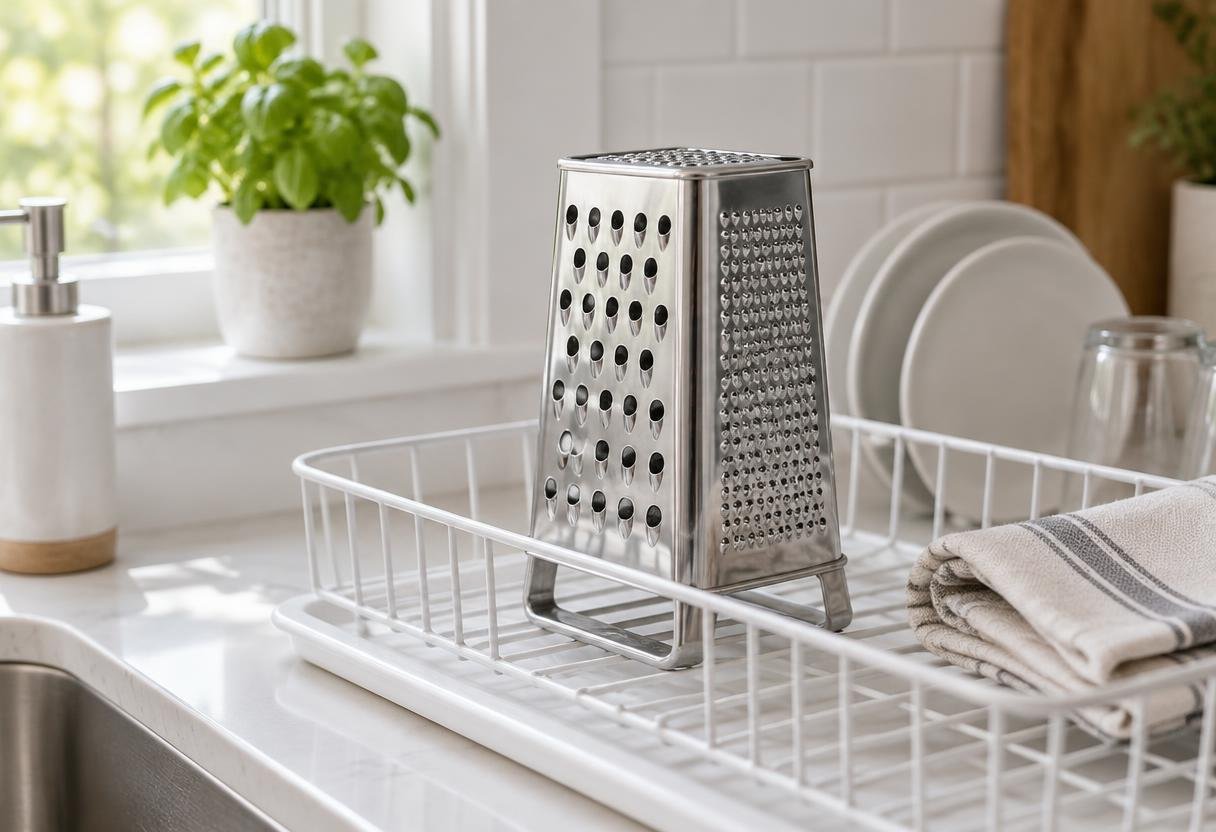
- Rinse and dry right away. Shake off the water, towel-dry the outside, and stand the grater upside down on a rack so the inside drains.
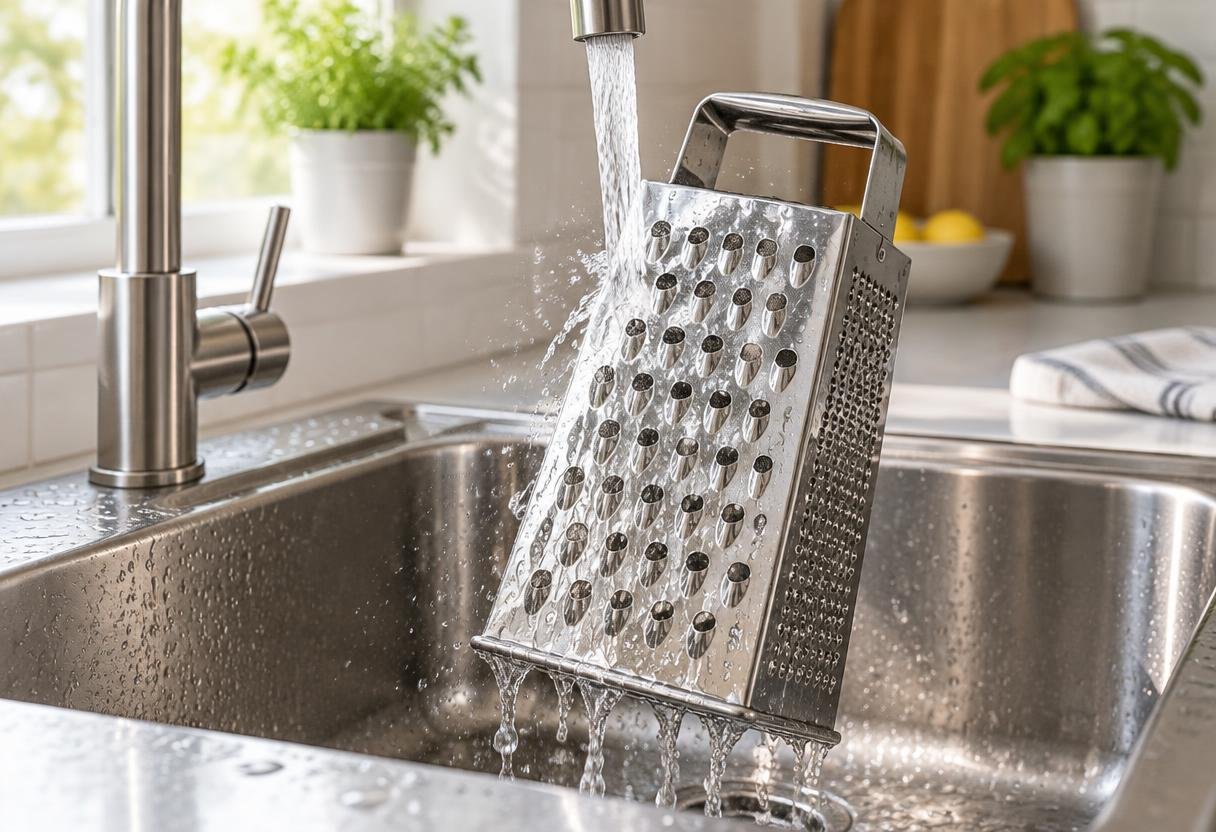
Done right, this is how to clean a cheese grater so it looks bright with no cloudy film. If you still see residue in a few holes, poke it out with a toothpick rather than scrubbing harder.
How to Remove Dried, Stuck-On Cheese
Forgot about it until after dinner? Here is how to clean a cheese grater when the cheese has dried on:
- Soak it. Fill the sink with warm, soapy water and let the grater sit for 10 to 15 minutes. Dried cheese softens and lifts.
- Use half a lemon. Rub the cut side of a lemon over the blades in the non-cutting direction. The acid helps loosen the residue and leaves the grater smelling fresh.
- Grate a raw potato or a crust of bread. A few passes push stuck cheese out of the holes from behind.
- Try a toothpick. For a handful of stubborn holes, a toothpick is faster than any amount of scrubbing.
Can a Cheese Grater Go in the Dishwasher?
Knowing how to clean a cheese grater by hand still matters even if you own a dishwasher. Most stainless steel graters are dishwasher-safe, so check the packaging or the maker’s website. Still, rinse the cheese off first. A dishwasher bakes dried cheese onto the blades instead of removing it, and graters with plastic handles or wooden frames are better washed by hand.
If you grated raw meat for meatballs, or used the grater near raw chicken, wash it and then sanitize it. The USDA recommends a clean first, then sanitize routine, because soapy water removes grime but does not kill bacteria on its own.
Preventing Rust and Dull Blades
Drying is the step people skip when they learn how to clean a cheese grater. Water left sitting on the blades causes rust spots, especially on cheaper graters. Always dry yours completely before putting it in a drawer. If a few orange spots appear, scrub them with a paste of baking soda and a little water, rinse, and dry.
Store the grater upright or with a cover over the blades so they don’t get knocked against other tools. A grater that feels dull and drags no matter how clean it is has simply reached the end of its life. Our roundup of the best cheese grater under $20 covers budget models that rinse clean easily. For more cleaning routines, see how to keep kitchen gadgets clean.
Troubleshooting Common Grater Problems
Most cheese grater frustrations come down to a few simple causes. Here’s how to fix them:
| Problem | Likely Cause | Fix |
|---|---|---|
| Cheese clogs the holes while grating | Soft or warm cheese | Chill the cheese for 15–20 minutes before grating |
| Dried cheese stuck in the holes | Grater left to dry after use | Soak in warm, soapy water, then brush from the back |
| Rust spots | Grater put away wet | Scrub with a baking soda paste, then dry completely |
| Grating takes more effort than it used to | Dull or damaged teeth | Graters can’t really be resharpened, so replace it |
| Lingering cheese smell | Residue left in the holes | Soak in a vinegar and water mix, then wash as normal |
Common Questions
What is the fastest way to clean a cheese grater?
Rinse it under cool water right after grating, then wipe upward with a soapy sponge. Cleaning it within a few minutes is the biggest shortcut.
How do I clean a cheese grater without ruining my sponge?
Wipe against the cutting edges, not into them, or use a stiff dish brush for the inside of a box grater.
Why is my grater cloudy after washing?
That is usually leftover cheese fat or hard-water spots. A quick soak in warm water with a splash of white vinegar, followed by a rinse, clears it.
How often should I deep clean a grater?
A quick wash after every use is enough. Give it a soak and a lemon rub once a month, or whenever residue starts building up in the holes.
Bottom Line
Now you know how to clean a cheese grater the easy way: tap, rinse cool, wipe against the blades, wash and dry. Do it right after grating, and the whole job takes less time than grating the cheese did. Learning how to clean a cheese grater properly keeps it sharp, rust-free and ready for the next pasta night.