
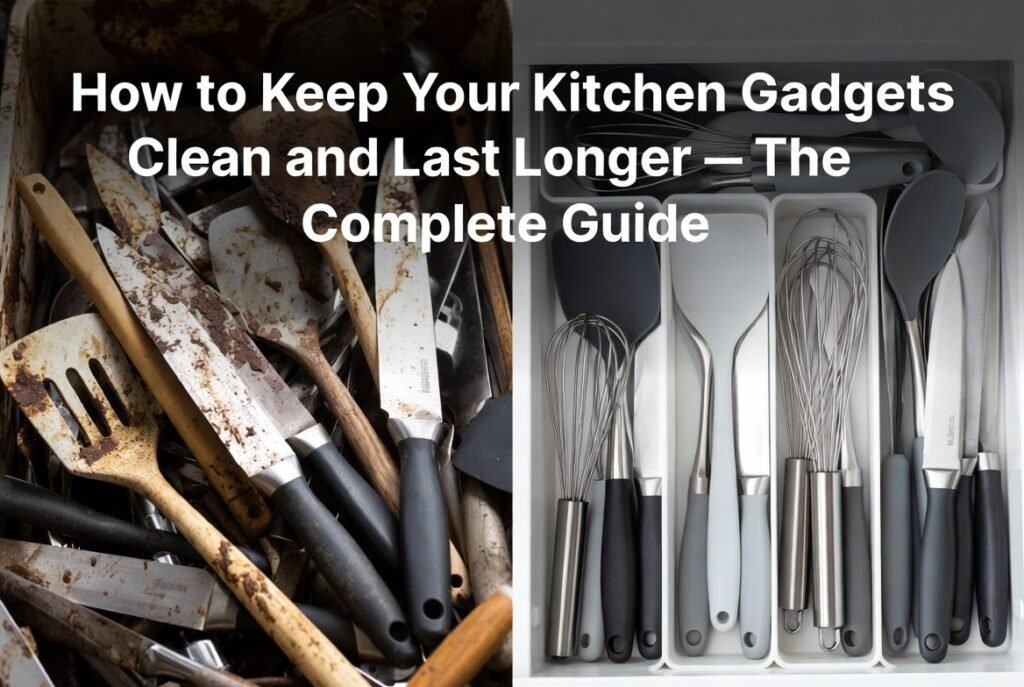
How to keep kitchen gadgets clean is one of the smartest habits you can build as a home cook. Most kitchen gadgets don’t wear out from heavy use — they fail because of improper cleaning, being stored wet, or harsh dishwasher cycles. Stainless steel rusts, silicone absorbs odors, plastic warps, and sharp blades dull faster than they should.
In this complete guide, you’ll learn exactly how to keep kitchen gadgets clean based on material type, the best storage methods, and the most common mistakes that shorten their lifespan.
How to keep kitchen gadgets clean is one of the smartest habits you can build as a home cook. According to Serious Eats, proper cleaning and storage can dramatically extend the life of your kitchen tools.
A well-maintained set of tools also makes cooking more enjoyable. Pair these cleaning habits with the Best Kitchen Knife Under $20 and the Di Oro Silicone Spatula Set for better long-term performance.
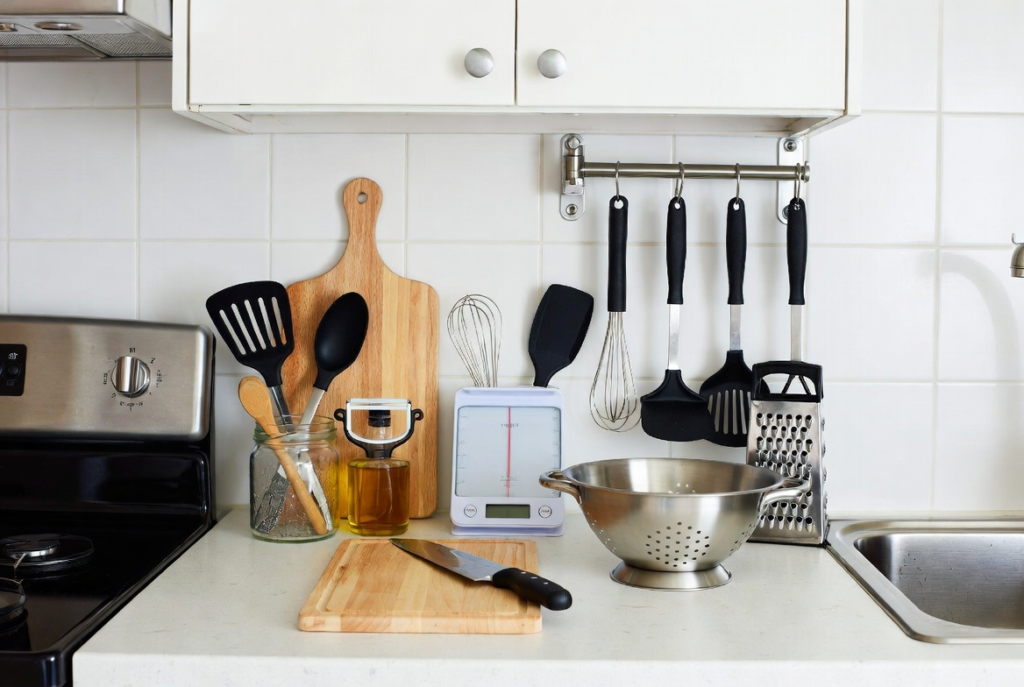
Table of Contents
- Why Learning How to Keep Kitchen Gadgets Clean Matters
- How to Clean Stainless Steel Kitchen Gadgets
- How to Clean Silicone Kitchen Gadgets
- How to Clean Plastic Kitchen Gadgets
- How to Clean Sharp Kitchen Gadgets
- How to Store Kitchen Gadgets Properly
- Common Mistakes That Ruin Kitchen Gadgets
- Final Tips on How to Keep Kitchen Gadgets Clean
Why Learning How to Keep Kitchen Gadgets Clean Matters
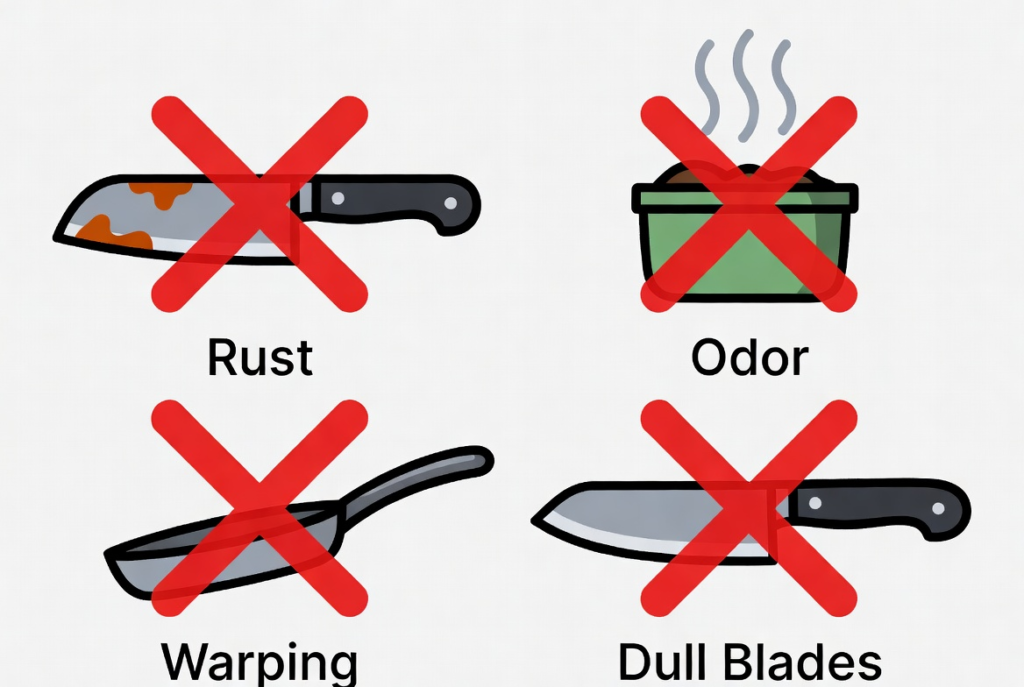
Keeping kitchen gadgets clean properly can easily double or triple their lifespan. Stainless steel rusts when left wet. Silicone absorbs strong odors. Plastic warps and stains. Sharp blades dull when stored incorrectly.
Mastering how to keep kitchen gadgets clean takes almost no extra time, but it saves you money and frustration in the long run. A well-maintained set of tools also makes cooking more enjoyable and hygienic.
How to Clean Stainless Steel Kitchen Gadgets
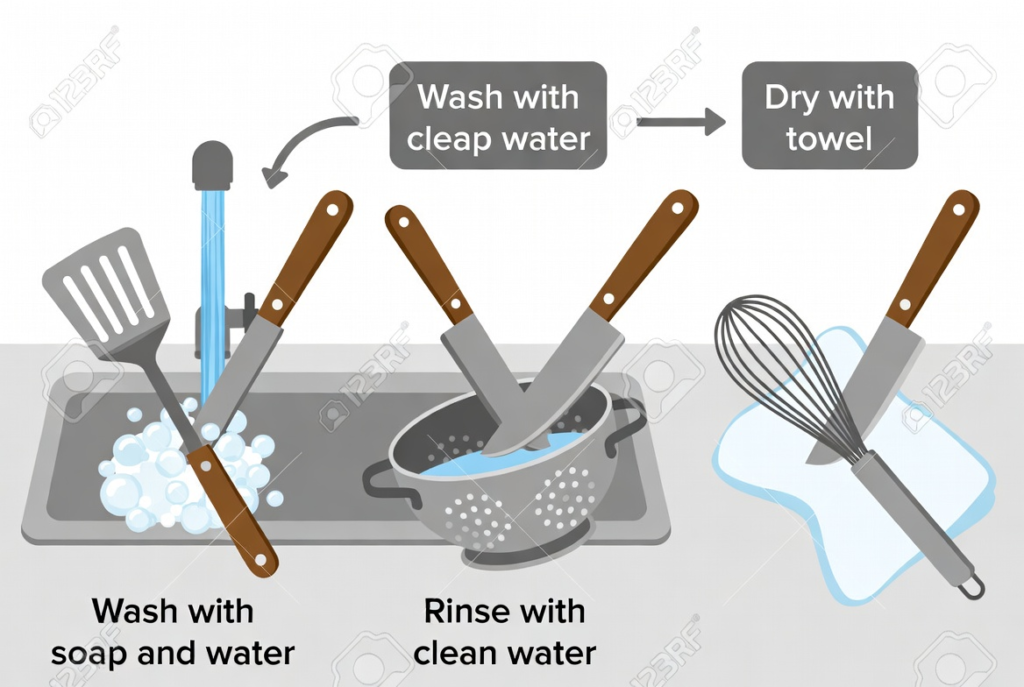
Stainless steel tools (ladles, colanders, whisks, etc.) are durable but hate moisture.
- Wash in warm soapy water immediately after use. Dried food and starchy residue become much harder to remove later and can cause staining.
- Rinse thoroughly and dry completely with a dish towel before storing. Never leave stainless steel tools wet — moisture is the primary cause of rust and pitting.
- Most stainless steel tools are dishwasher safe, but hand washing and immediate drying are always better for long-term condition.
- Avoid steel wool or abrasive scrubbers, which scratch the surface and make it more vulnerable to rust over time.
For more expert advice on caring for stainless steel and sharp tools, check this detailed guide by Wirecutter.
How to Clean Silicone Kitchen Gadgets
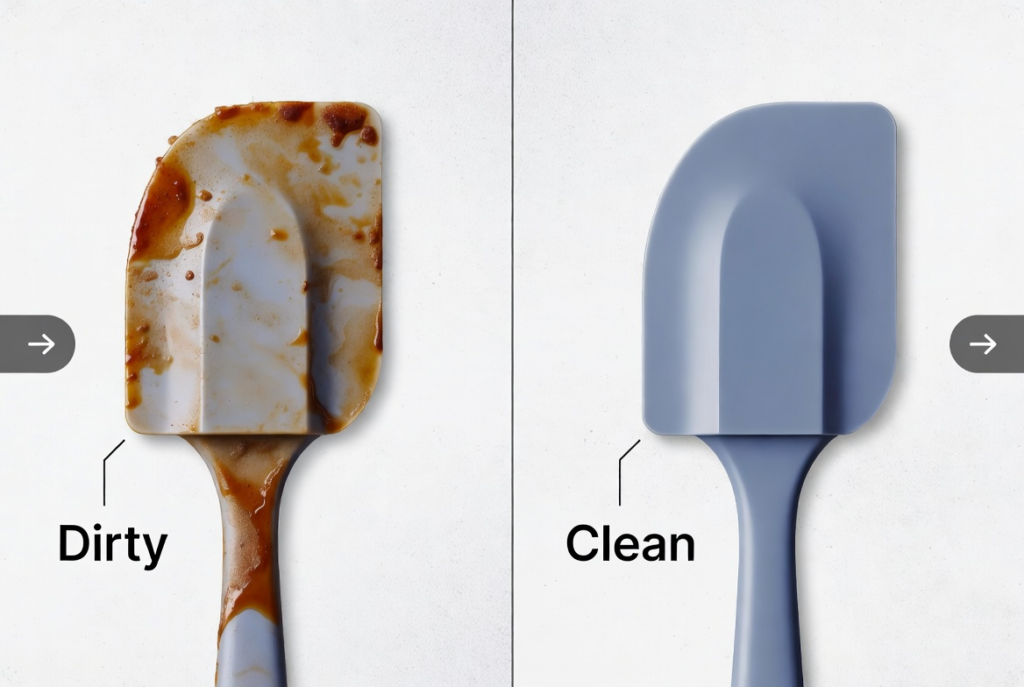
Silicone spatulas, spoon rests, oven mitts, and strainers are non-porous and naturally resistant to bacteria, but they can absorb strong odors from garlic, onion, and fish over time if not cleaned correctly.
- Wash in hot soapy water immediately after use.
- For stubborn odors, soak the tool in a solution of warm water and baking soda for 30 minutes, then rinse and air dry.
- Most silicone tools are dishwasher safe — place them on the top rack to avoid direct heat from the heating element.
- Never use bleach or harsh chemical cleaners on silicone, as these break down the material over time.
How to Clean Plastic Kitchen Gadgets
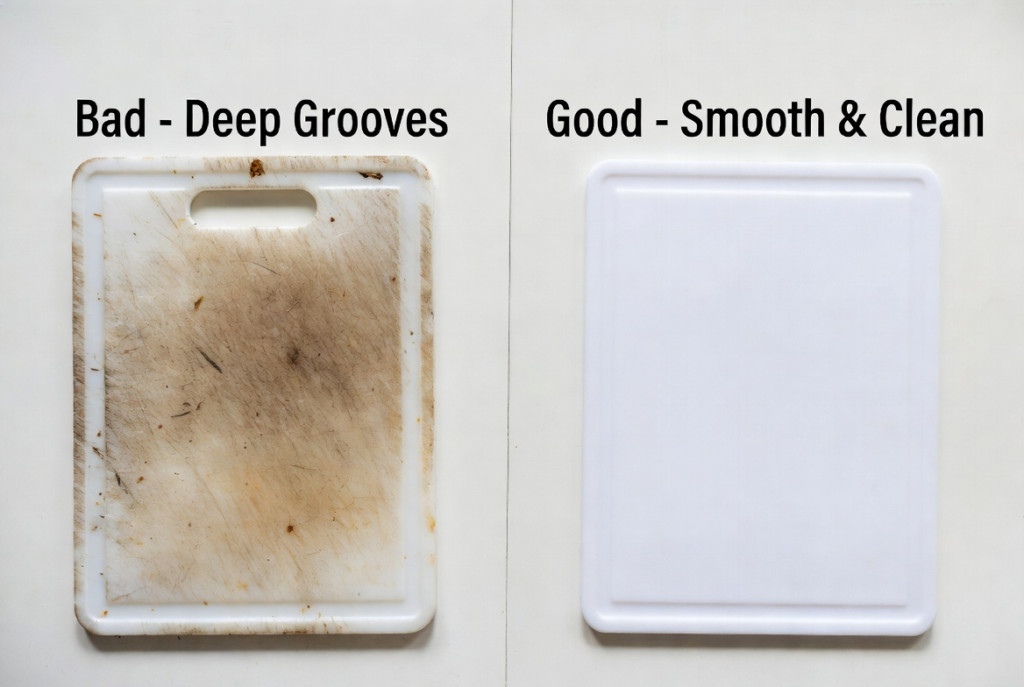
Plastic cutting boards, colanders, and measuring spoons are affordable and practical but require careful cleaning to stay hygienic and last longer.
- Wash in warm (not hot) soapy water after every use. Avoid very hot water and high-heat dishwasher cycles — extreme heat causes plastic to warp, crack, and become brittle.
- For cutting boards, scrub both sides after every use and disinfect weekly with a solution of one tablespoon of white vinegar mixed with one cup of water.
- Replace plastic cutting boards when deep knife marks develop. Deep grooves harbor bacteria that cannot be scrubbed out, regardless of how thoroughly you clean.
How to Clean Sharp Kitchen Gadgets
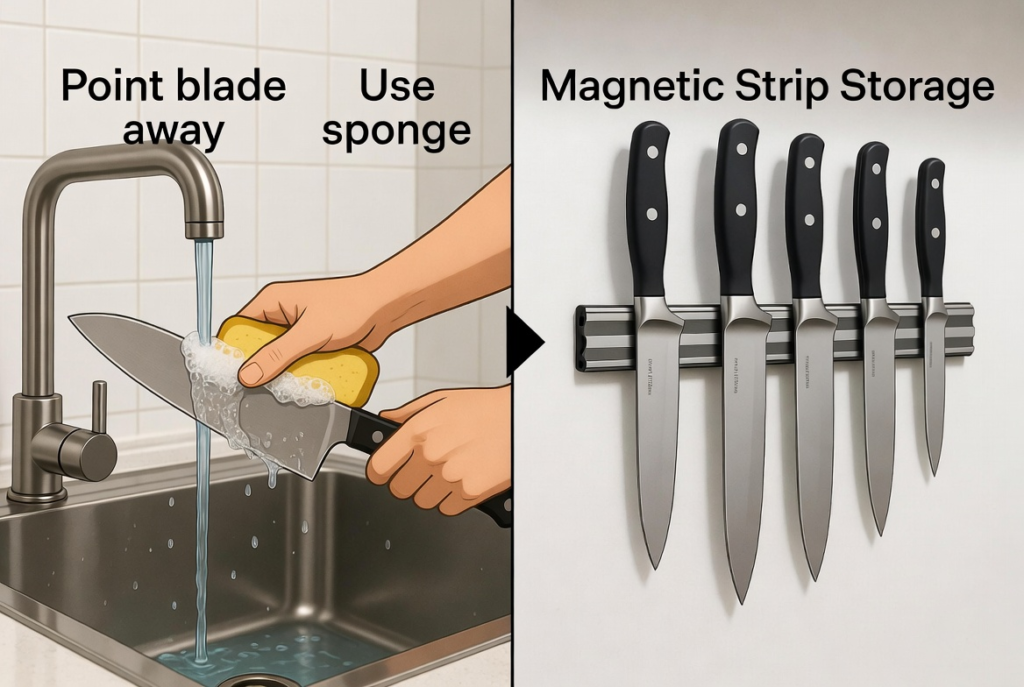
Kitchen shears, herb scissors, mandoline slicers, cheese graters, and vegetable peelers all have sharp edges that require special care.
- Always hand-wash sharp tools rather than putting them in the dishwasher. Dishwasher detergent is harsh and dulls blades over time.
- Wash with a soft sponge, moving away from the blade rather than across it to protect your fingers.
- Dry sharp tools immediately and completely before storing. Moisture dulls blades and causes rust on steel edges faster than anything else.
- Store them separately from other utensils so the blades don’t get nicked or dulled by contact with metal tools.
How to Store Kitchen Gadgets Properly
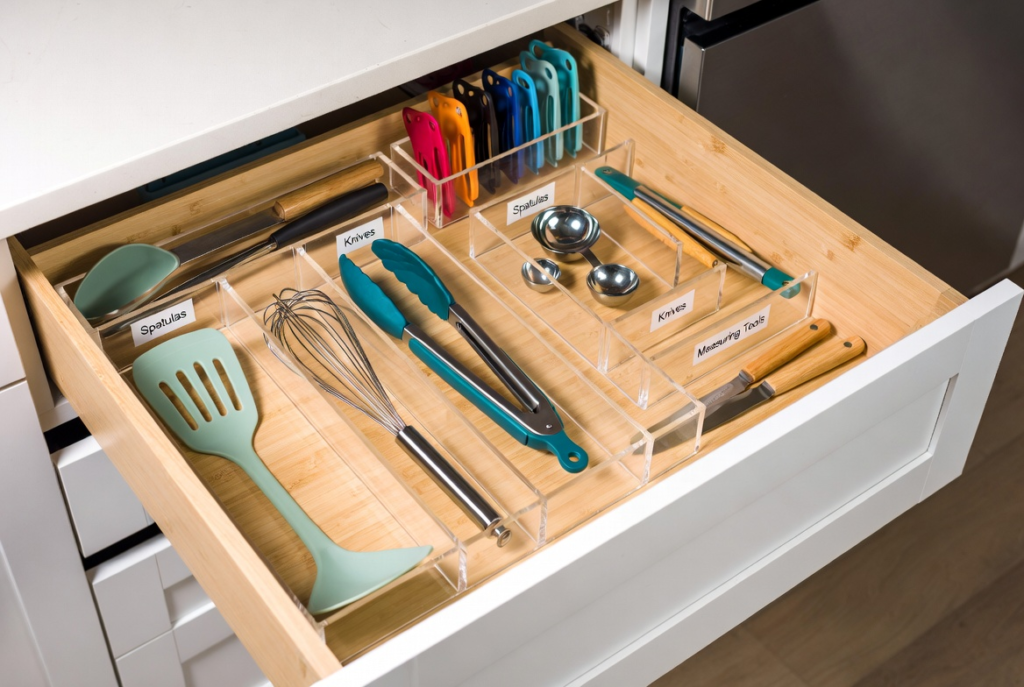
Proper storage is just as important as proper cleaning when it comes to making kitchen gadgets last.
- Store sharp tools (knives, shears, peelers, graters) in a drawer organizer or on a magnetic strip where blades do not contact other utensils.
- Hang ladles, spatulas, and tongs on a utensil hook near the stove so they are easy to reach and air out between uses.
- Stack silicone and plastic tools loosely in a drawer — never force them into tight spaces, which causes warping and cracking over time.
- Keep everything completely dry before storing to prevent mold, rust, and odors.
Common Mistakes That Ruin Kitchen Gadgets
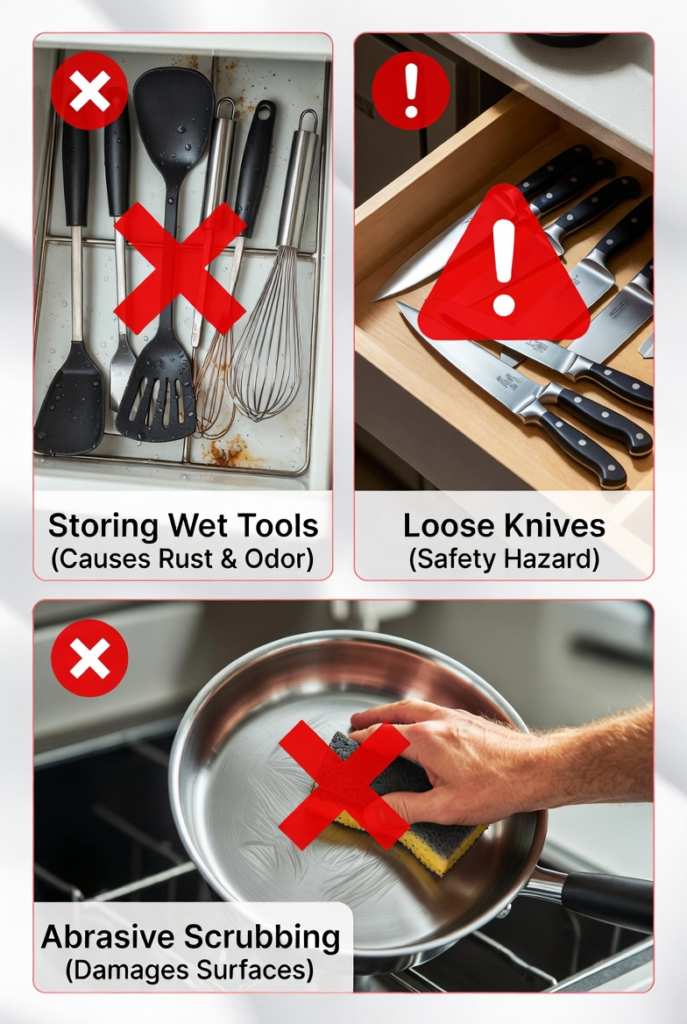
Even careful home cooks make these mistakes that shorten the life of their tools:
- Leaving tools wet before storing (the biggest cause of rust and mold)
- Putting everything in the dishwasher without checking material compatibility
- Storing all utensils loose in one big drawer
- Using harsh abrasive scrubbers on any surface
- Ignoring manufacturer care instructions
Final Tips on How to Keep Kitchen Gadgets Clean
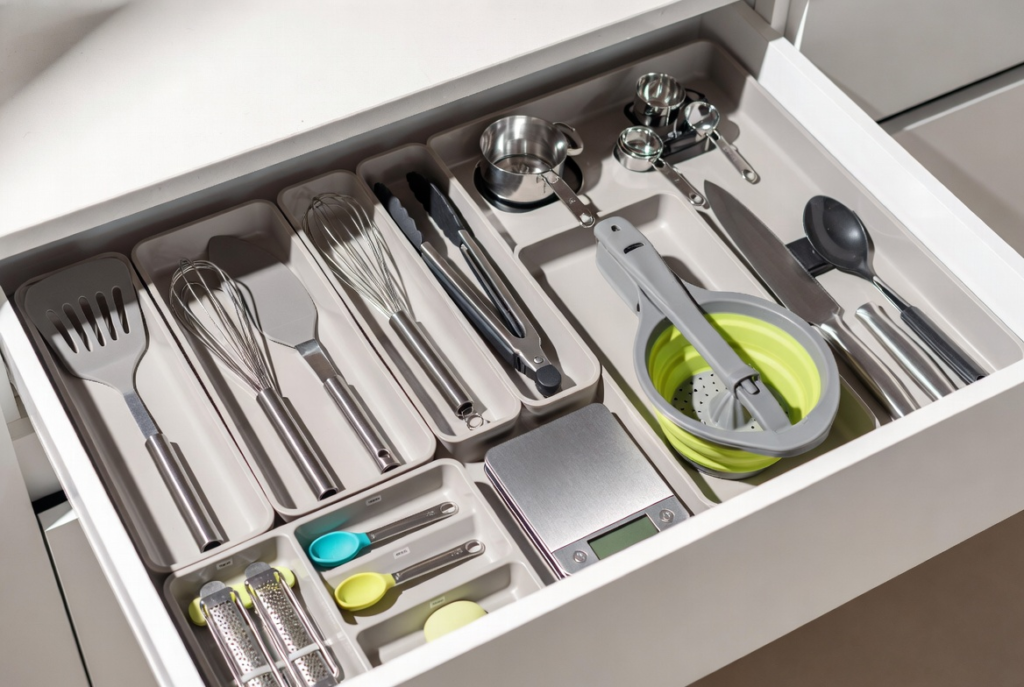
- Wash immediately after use — don’t let food dry on
- Dry completely before storing
- Store sharp tools separately
- Match your cleaning method to the material
- Buy quality tools from trusted brands — they last longer even at similar prices
Follow these habits consistently, and every gadget in your kitchen will serve you reliably for years instead of months.
If you’re looking to upgrade your tools, check out our reviews of the Zulay Kitchen Silicone Spoon Rest, Best Kitchen Knife Under $20, and Best Mixing Bowls Under $20.
Which tip are you going to try first? Let us know in the comments!
For more science-backed cleaning tips, you can also refer to America’s Test Kitchen.
Follow these habits consistently, and every gadget in your kitchen will serve you reliably for years instead of months.
If you’re looking to upgrade your tools while keeping them clean and organized, check out our review of the Zulay Kitchen Silicone Spoon Rest and the Best Mixing Bowls Under $20.
Disclosure: dailykitchenpicks.com is a participant in the Amazon Services LLC Associates Program, an affiliate advertising program designed to provide a means for sites to earn advertising fees by advertising and linking to Amazon.com. This means we may earn a small commission if you purchase through our links, at no extra cost to you.