
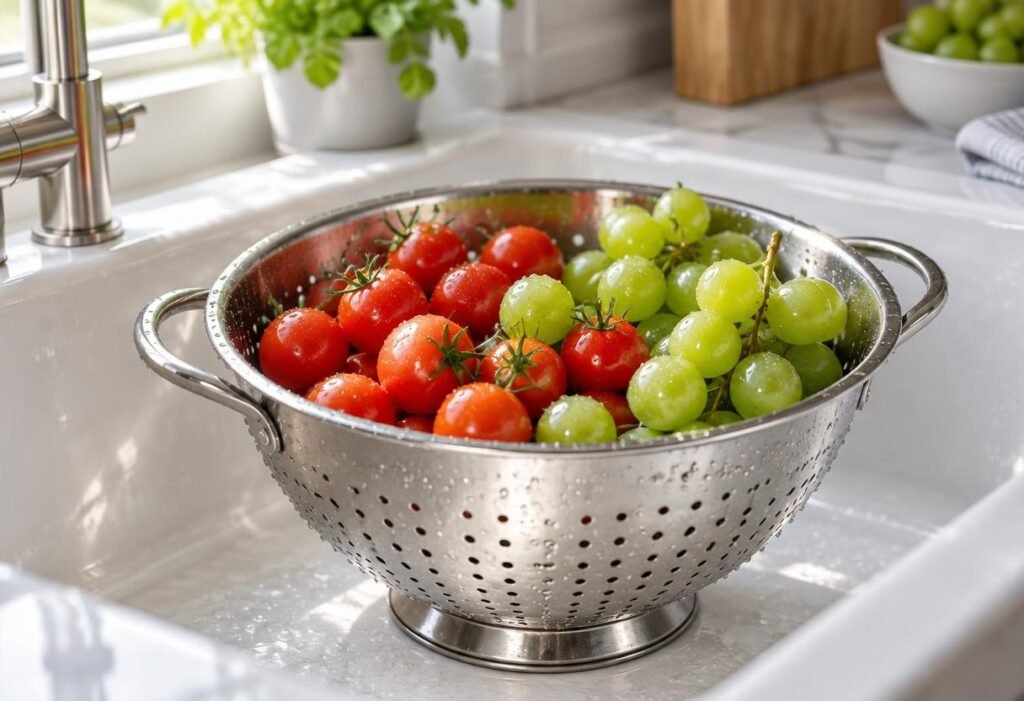
A colander only touches water and food, so it’s easy to assume it stays clean on its own. Then one day you notice a cloudy film, a few holes plugged with dried pasta, or orange stains on a plastic one that won’t budge. Learning how to clean a colander properly is quick, and it keeps the holes draining the way they should.
Table of Contents
- Why Colanders Need More Than a Rinse
- How to Clean a Colander Step by Step
- Clearing Clogged Holes
- Removing Starch Film, Hard-Water Spots and Stains
- Stainless Steel vs Plastic vs Mesh
- Colander Cleaning Schedule
- FAQ
- Final Tips
Why Colanders Need More Than a Rinse
Pasta water leaves behind starch, which dries into a sticky film. Rice and grains wedge into the holes. Raw produce brings in soil and bacteria. When NSF International swabbed everyday kitchen items in its 2013 household germ study, strainers were among the tools tested, and yeast and mold turned up on every item in the study. A quick rinse doesn’t remove any of that.
How to Clean a Colander Step by Step
Here is how to clean a colander after everyday use:
- Rinse it right away. Starch and food bits come off easily while they’re still wet.
- Spray from the outside in. Turn the colander upside down and run water through the holes from the outside. That pushes trapped bits back the way they came instead of deeper into the holes.
- Wash with hot, soapy water. Use a sponge on the inside and a brush or the rough side of the sponge on the outside, where food tends to collect around the holes.
- Rinse again from the outside. Make sure no soap is left in the holes.
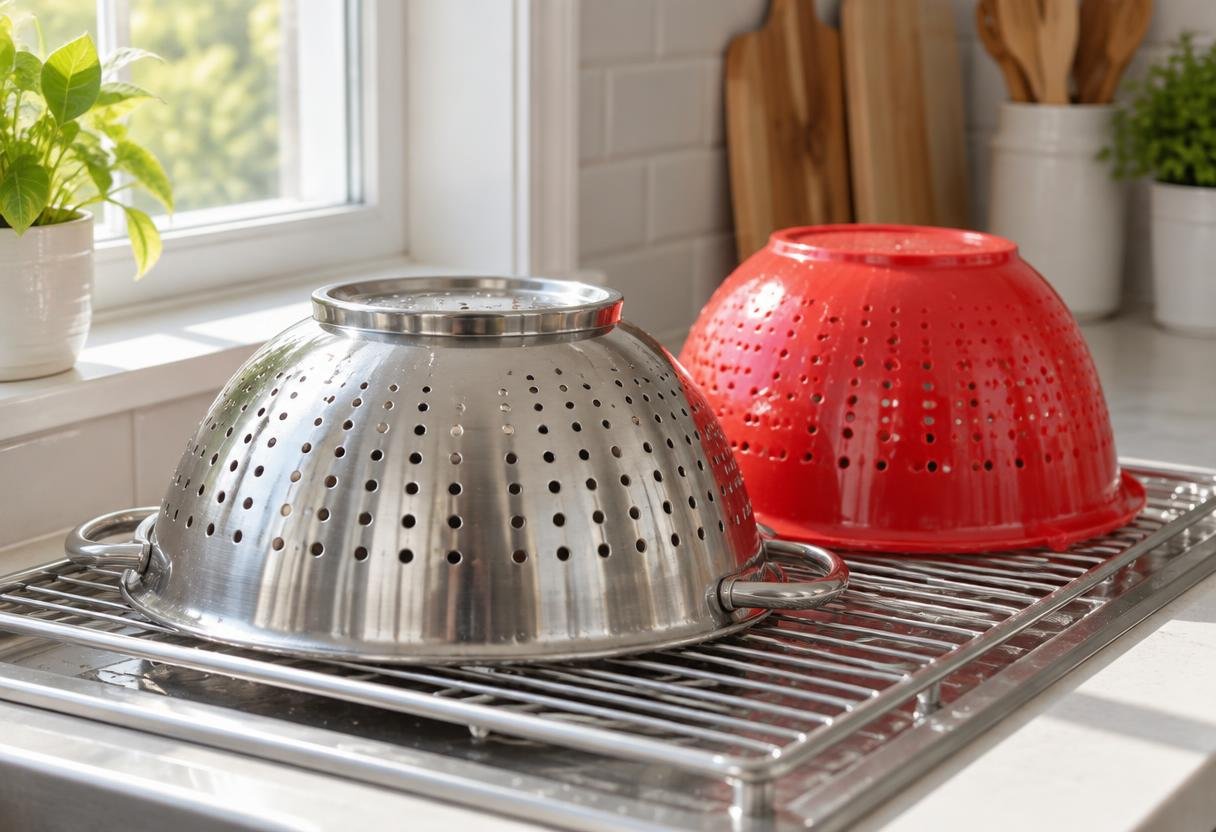
- Dry it upside down. Shake out the water and set it upside down on a rack so air reaches both sides.
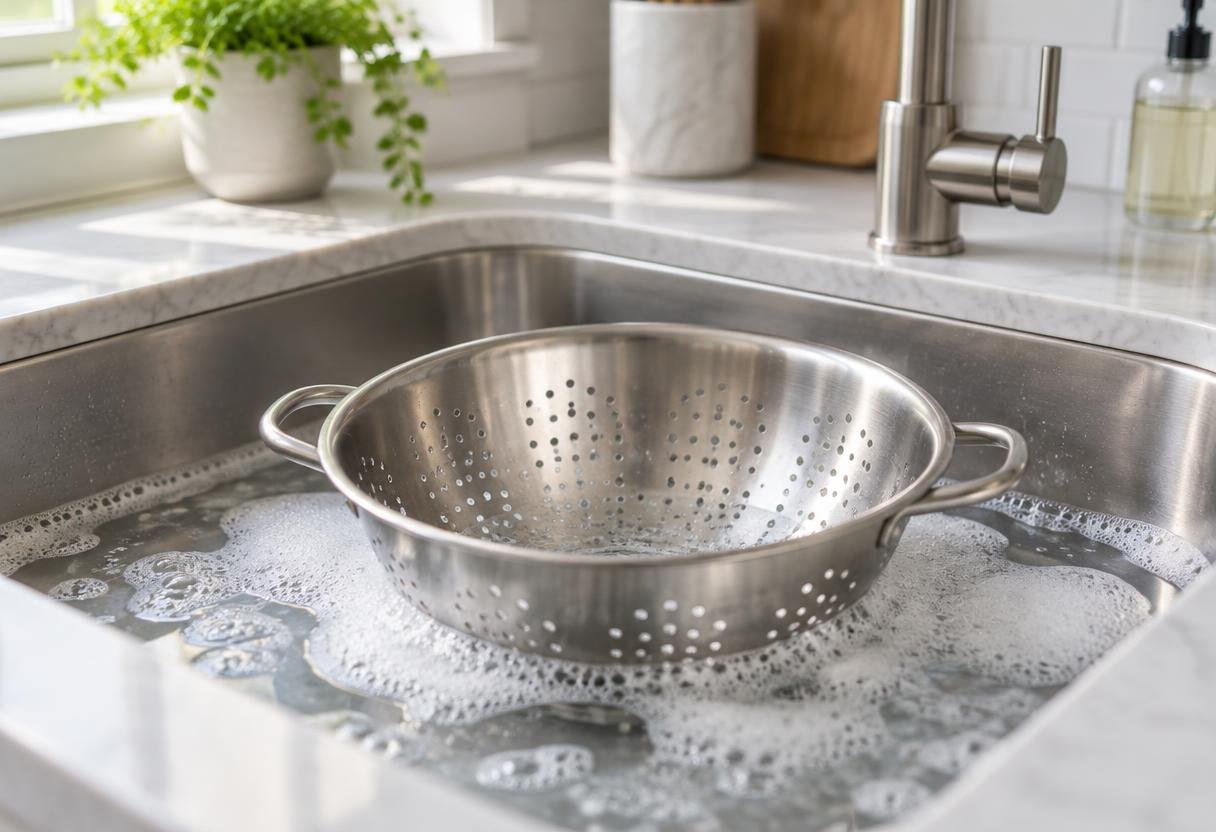
That routine is how to clean a colander in under two minutes, and it prevents most of the problems below.
Clearing Clogged Holes
If grains or pasta have dried in the holes, soak the colander in hot, soapy water for 15 minutes first. Then hold it up to the light, find the blocked holes and push them clear with a toothpick or wooden skewer. Rinse from the outside to flush out what’s left. Knowing how to clean a colander with clogged holes saves you from slow draining and soggy pasta.
Removing Starch Film, Hard-Water Spots and Stains
- Starch film: soak in hot, soapy water, then scrub. Rinsing pasta through the colander under hot water right after draining stops the film from forming.
- Hard-water spots on stainless steel: soak in a 50/50 mix of white vinegar and water for 15 to 20 minutes, rinse and dry with a towel for a bright finish.
- Tomato or turmeric stains on plastic: scrub with a paste of baking soda and water, rinse, then leave the colander in direct sunlight for a few hours. Sunlight fades the stain noticeably.
Stainless Steel vs Plastic vs Mesh
How to clean a colander depends a little on what it’s made of:
- Stainless steel: the easiest to keep clean and usually dishwasher-safe. Towel-dry to avoid water spots.
- Plastic and silicone: usually dishwasher-safe on the top rack. They stain more easily, so rinse after tomato sauce or curry.
- Fine mesh strainers: the mesh traps fine particles. Soak, then tap the strainer upside down against the sink and rinse hard from the outside. Avoid scrubbing hard, which can bend the mesh.
If your colander is dented, cracked or rusting along the rim, replacing it is the better move. Our roundups of the best colander under $20 and the best pasta strainer under $20 cover easy-clean options, and a clip-on strainer is a space-saving alternative.
Colander Cleaning Schedule
A colander doesn’t need much, but a simple routine stops starch film and hard-water spots from building up:
| When | What to Do | Why |
|---|---|---|
| After every use | Rinse with hot water from the outside in | Pushes food out of the holes before it dries |
| Weekly (if used often) | Wash in hot, soapy water with a brush | Removes starch film and grease |
| Monthly | Soak in equal parts white vinegar and water | Dissolves hard-water spots |
| After raw meat or poultry | Wash thoroughly in hot, soapy water | Prevents cross-contamination |
FAQ
Can I put a colander in the dishwasher?
Most stainless steel and plastic colanders are dishwasher-safe. Rinse them first so starch and food don’t bake onto the holes, and check the label for anything with wooden handles or a coating.
How do I get the white film off my colander?
That’s usually dried starch or hard-water minerals. Hot soapy water removes starch; a white vinegar soak removes mineral spots.
How often should I deep clean a colander?
Wash it after every use and give it a soak once a month, or sooner if the holes start clogging.
Should I sanitize a colander after rinsing raw meat?
Food safety agencies advise against rinsing raw meat or poultry at all. If raw juices touched the colander, wash it in hot, soapy water and run it through the dishwasher.
Final Tips
Now you know how to clean a colander of any type: rinse right away, spray from the outside in, wash, and dry it upside down. A monthly soak takes care of clogged holes and film. Once you know how to clean a colander properly, yours will drain fast and stay spotless for years.