
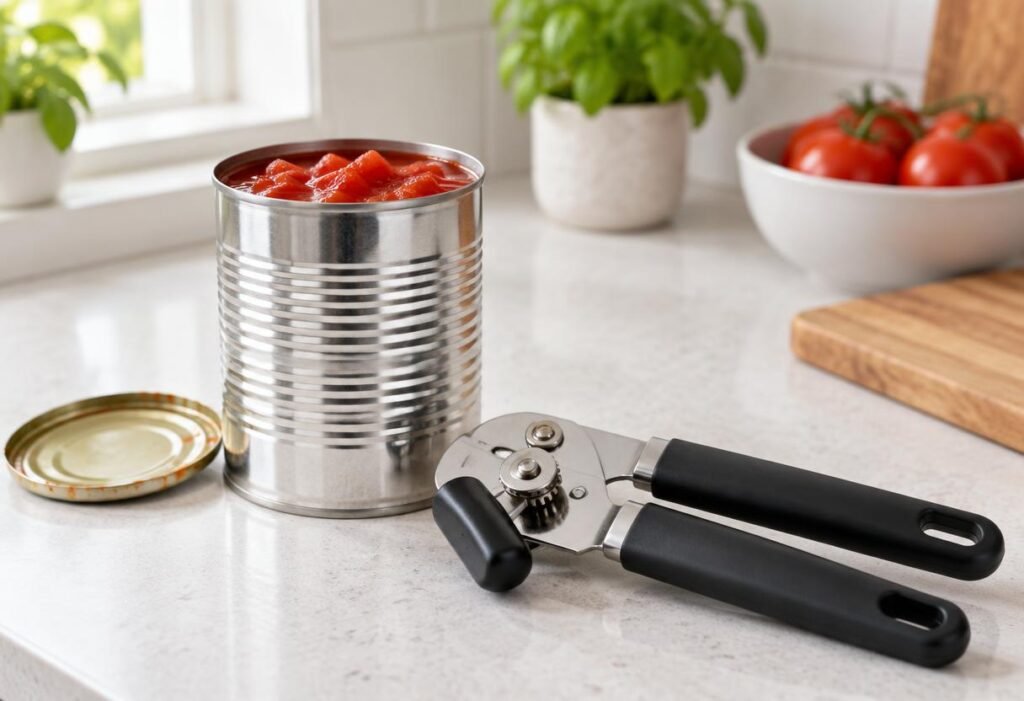
Most people rinse a can opener once in a while, if that. Meanwhile the blade dips into tomato sauce, tuna water and bean liquid every time you use it, and the gears quietly collect a dark crust. Knowing how to clean a can opener properly takes five minutes and gets rid of that gunk before it turns into rust or something worse.
Table of Contents
- Why Can Openers Get So Dirty
- How to Clean a Can Opener Step by Step
- Removing Rust and Built-Up Grime
- Cleaning an Electric Can Opener
- Can It Go in the Dishwasher?
- Can Opener Troubleshooting
- Can Opener Cleaning FAQ
- Quick Recap
Why Can Openers Get So Dirty
The cutting wheel pierces the lid and runs through whatever is inside the can, then gets tossed back in the drawer. Food residue dries in the gear teeth and along the blade, where a quick rinse never reaches. In a 2013 NSF International germ study of household kitchens, the can opener ranked among the germiest items tested, alongside blender gaskets and rubber spatulas.
The fix isn’t complicated. It just needs to become part of the routine.
How to Clean a Can Opener Step by Step
Here is how to clean a can opener after regular use:
- Rinse right after use. Run hot water over the cutting wheel and gears before food dries on them.
- Soak it. For a more thorough clean, put the opener in a bowl of hot, soapy water for 10 to 15 minutes to soften any residue.
- Scrub the wheel and gears. An old toothbrush reaches between the gear teeth better than a sponge. Turn the handle while you scrub so every tooth gets cleaned.
- Pick out the stubborn bits. A toothpick clears residue packed into the gear teeth or around the hinge.
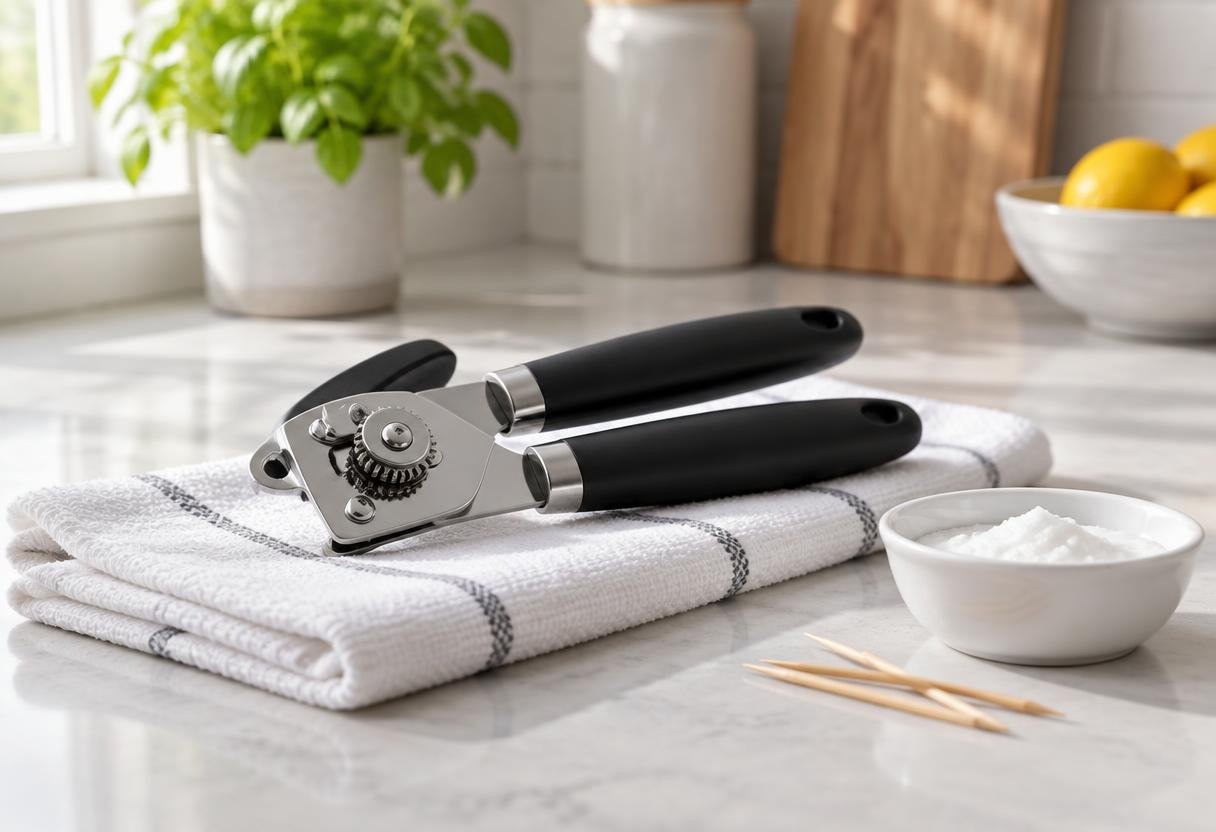
- Rinse and dry completely. Towel it off, then leave it open on a rack so water drains out of the joints.
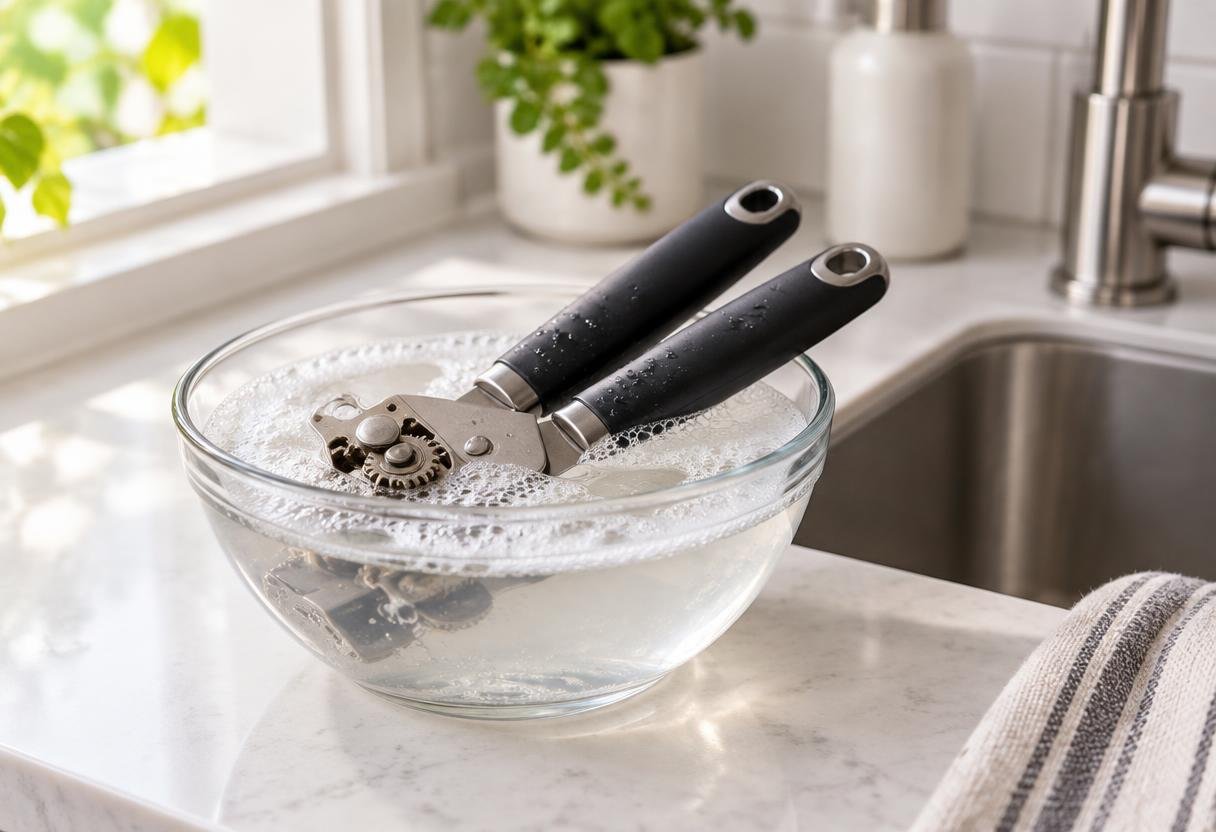
Drying is the step that matters most when you learn how to clean a can opener. Water trapped in the hinge and gears is what causes rust.
Removing Rust and Built-Up Grime
If your opener already has a dark crust or orange rust spots, here is how to clean a can opener that’s been neglected:
- Baking soda paste: mix baking soda with a little water, coat the gears and blade, wait 10 minutes, then scrub and rinse.
- White vinegar soak: soak the cutting head in white vinegar for 30 minutes to loosen rust, then scrub, rinse well and dry.
- A drop of oil: once it’s clean and dry, put a drop of food-grade mineral oil on the hinge and turn the handle a few times. It keeps the mechanism smooth and helps block moisture.
Heavy rust that won’t scrub off, or a wheel that slips and leaves jagged lids, means it’s time to replace it.
Cleaning an Electric Can Opener
Unplug it first. Many electric openers have a removable cutting assembly; check the manual and lift it off so you can wash it by hand in hot, soapy water. Wipe the body with a damp, soapy cloth, paying attention to the area around the blade and magnet, then wipe again with a clean damp cloth. Never put the motor housing in water.
Can It Go in the Dishwasher?
Some stainless steel manual openers are dishwasher-safe, so check the packaging. Many are not, and the long hot cycle can rust carbon-steel gears or loosen the handles. Hand washing is the safer default, which is why learning how to clean a can opener by hand is worth the five minutes.
If yours is past saving, our guide to the best can opener under $20 includes models with smooth-edge cutting and easy-clean designs. For the rest of your tools, see how to keep kitchen gadgets clean.
Can Opener Troubleshooting
If your can opener isn’t working like it used to, the cause is usually dirt or wear rather than a broken tool. Here’s what to check:
| Problem | Likely Cause | Fix |
|---|---|---|
| Black gunk on the wheel | Food and oil buildup | Scrub the wheel and gears with an old toothbrush and soapy water |
| Slips or won’t grip the rim | Dirty or worn gears | Clean the gears first; if it still slips, replace it |
| Rust on the blade or gears | Put away wet | Baking soda paste or a vinegar soak, then dry fully |
| Knob is stiff to turn | Dried residue in the mechanism | Soak, scrub, dry, then add a drop of food-grade mineral oil |
| Leaves jagged lid edges | Dull cutting wheel | Time for a new opener |
Can Opener Cleaning FAQ
How often should I clean my can opener?
Rinse it after every use and give it a full soak and scrub once a week if you open cans often.
What is the black gunk on my can opener?
Usually dried food residue mixed with grease from the gears, sometimes with rust underneath. A soak followed by a baking soda scrub removes it.
Is a rusty can opener safe to use?
Light surface rust can be cleaned off. If rust has pitted the cutting wheel or flakes into food, replace the opener.
How do I stop my can opener from rusting?
Dry it completely after washing, store it somewhere dry, and add a drop of food-grade mineral oil to the hinge now and then.
Quick Recap
Now you know how to clean a can opener the right way: rinse after use, soak and scrub the gears, pick out the stubborn bits and dry it completely. A few minutes a week keeps it rust-free and food-safe, and understanding how to clean a can opener properly means it will last for years.