
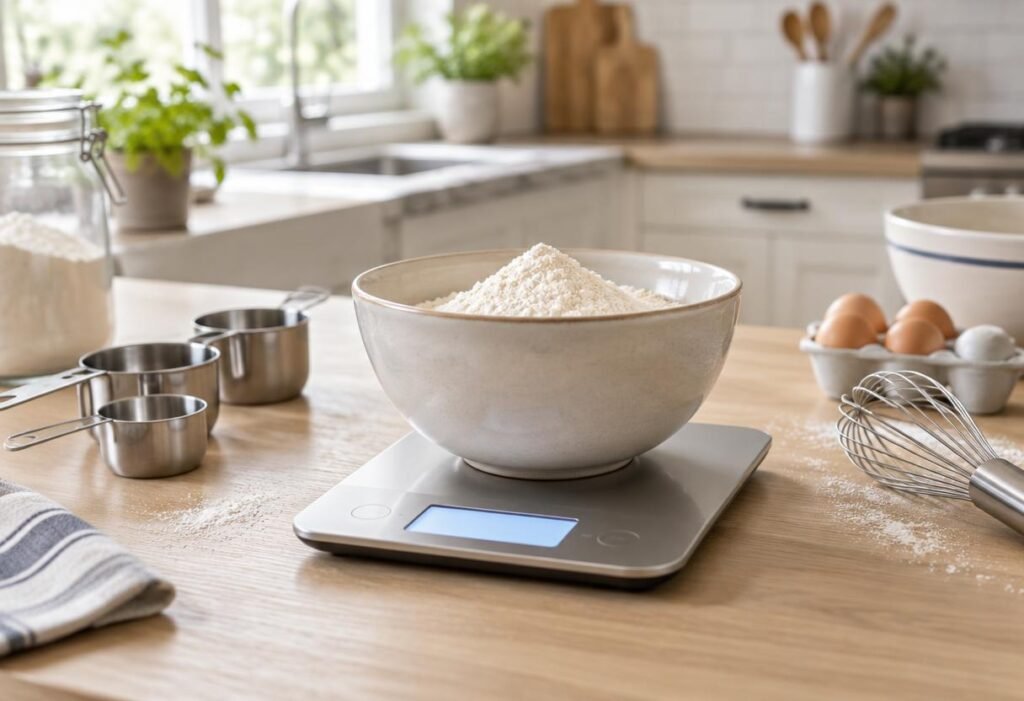
A digital kitchen scale is only useful if you can trust the number on the screen. Over time, scales drift: batteries weaken, the scale gets bumped, or it’s moved to a different counter. If your bread keeps coming out dense or your coffee tastes off, the scale may be the culprit. Here’s how to calibrate a kitchen scale, and how to check whether it actually needs it.
Table of Contents
- How to Test Your Scale’s Accuracy
- Before You Calibrate
- How to Calibrate a Kitchen Scale Step by Step
- No Calibration Weight? Use Coins
- Tips to Keep Your Scale Accurate
- US Coin Weights for Quick Checks
- Kitchen Scale FAQs
- Final Word
How to Test Your Scale’s Accuracy
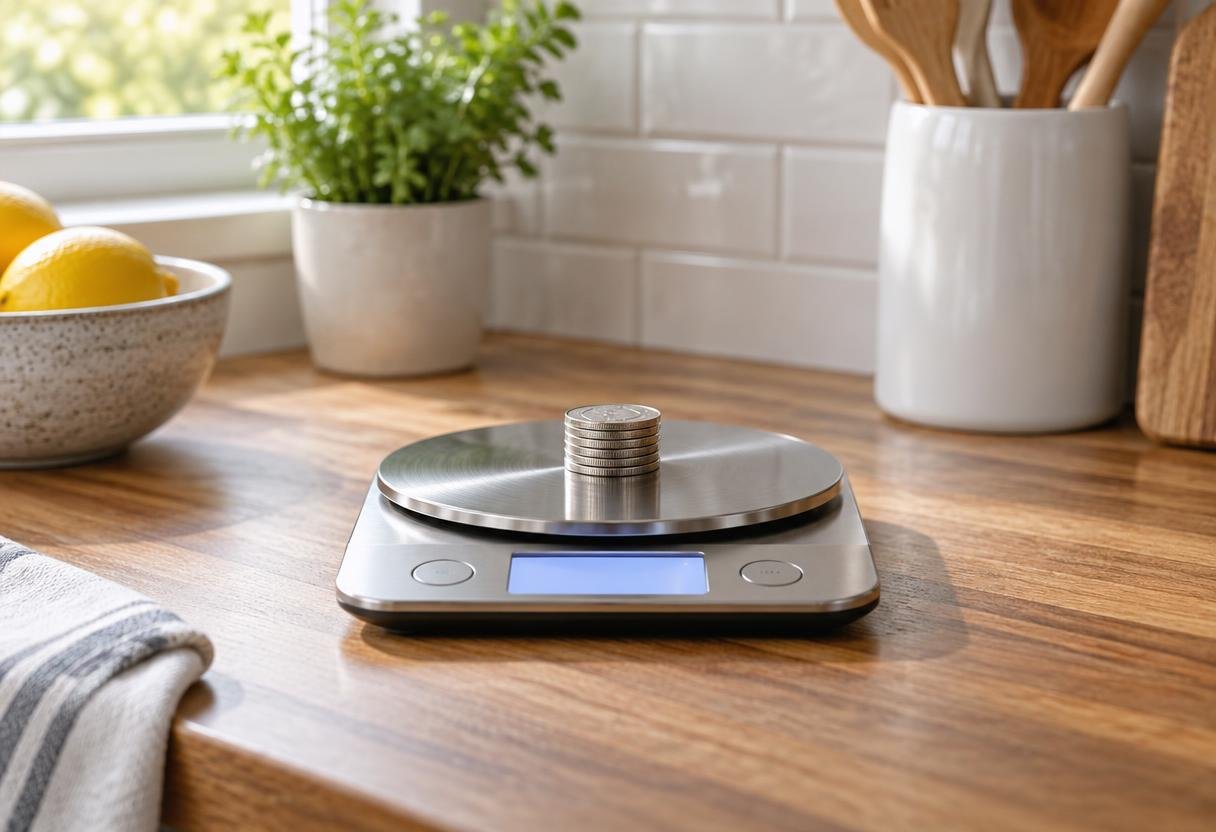
Before learning how to calibrate a kitchen scale, find out whether yours is actually off. You need an object with a known weight. US coins are perfect for this because they’re minted to precise weights:
- A US nickel weighs 5 grams.
- A US penny made after 1982 weighs 2.5 grams.
Turn on the scale, wait for it to read zero, and place one nickel in the center. If it reads 5 g, you’re fine. For a better test, use several: ten nickels should read 50 g. A reading that’s off by more than a gram or two means it’s time to calibrate.
Before You Calibrate
- Put the scale on a hard, flat, level surface. Uneven counters and soft surfaces like towels cause errors.
- Replace weak batteries. Low power is one of the most common causes of wrong readings.
- Let it warm up. If the scale was in a cold room, give it a few minutes at room temperature.
- Clear the platform. Remove any bowl, crumbs or residue.
Sometimes these steps alone fix the problem, so test again before going further.
How to Calibrate a Kitchen Scale Step by Step
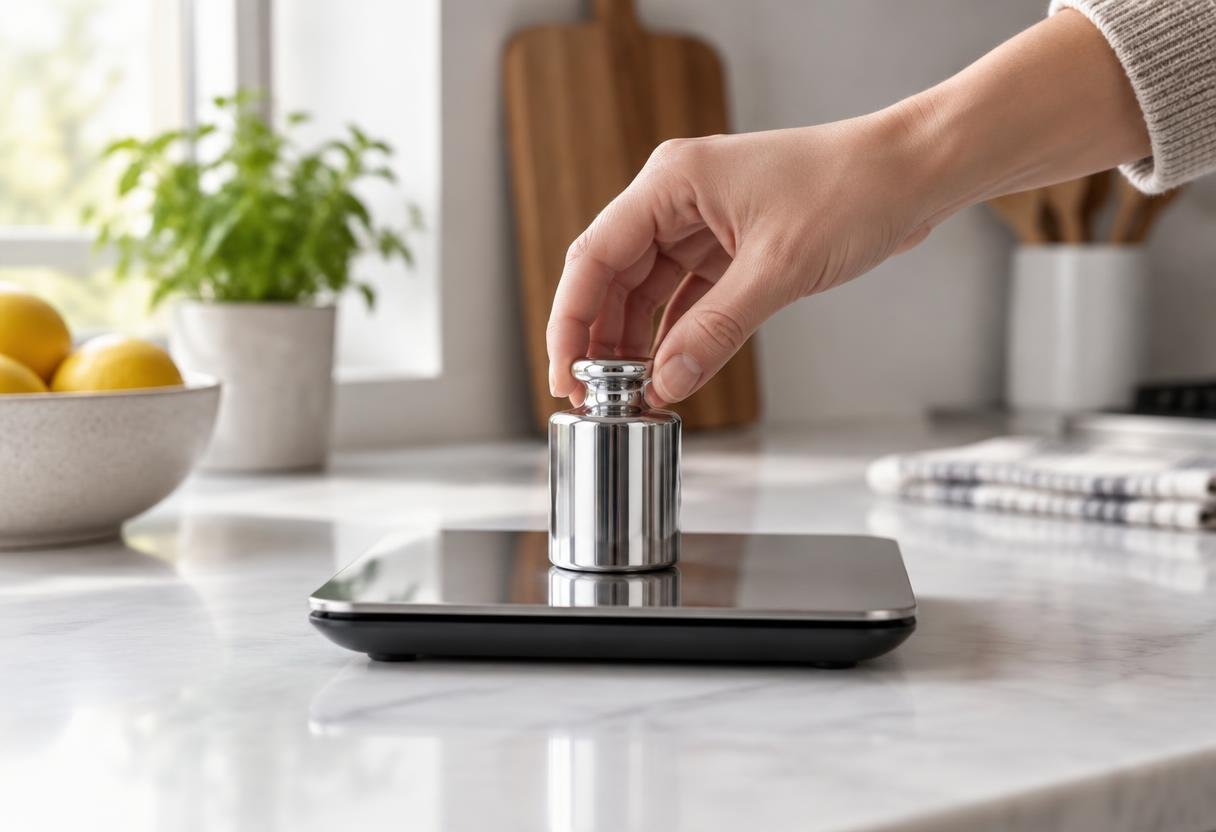
The exact button sequence varies by brand, so keep your manual handy (most are also available online). The general process for how to calibrate a kitchen scale looks like this:
- Enter calibration mode. This usually means holding the “CAL,” “MODE,” or “UNIT” button for a few seconds until the display changes, often to “CAL” or a flashing number.
- Note the weight it asks for. The screen will show the calibration weight it expects, such as 500 g or 1,000 g.
- Place the calibration weight in the center. Use the exact weight shown.
- Wait for confirmation. The display typically shows “PASS,” “END,” or returns to zero.
- Remove the weight and test again with your coins to confirm the readings are now correct.
Not every budget scale has a calibration mode. If yours doesn’t, it’s factory-calibrated only. If it still reads wrong after a battery change, it’s probably time for a replacement.
No Calibration Weight? Use Coins
Calibration weights are inexpensive, but if you’re wondering how to calibrate a kitchen scale without one, you can often improvise. If your scale asks for 100 g, twenty US nickels weigh exactly 100 g. For larger amounts, a sealed, unopened product with a printed net weight can work as a rough stand-in, though it’s less precise because packaging adds weight.
This is the easiest way to handle how to calibrate a kitchen scale at home without buying anything extra.
Tips to Keep Your Scale Accurate
- Always use the tare button to zero out your bowl before adding ingredients.
- Don’t store heavy items on top of the scale, which can strain the sensor.
- Keep it away from heat sources like the stove.
- Wipe it clean with a damp cloth. Never submerge it in water.
Weighing really does make a difference in baking. King Arthur Baking’s ingredient weight chart shows how much a cup of flour, sugar or butter should actually weigh. If you’re shopping for a new scale, see our guide to the best digital kitchen scale under $20, and pair it with accurate measuring cups and spoons for liquids.
US Coin Weights for Quick Checks
US Mint coins are made to set weights, which makes them handy test weights when you don’t have a calibration weight. Clean, undamaged coins work best:
| Coin | Weight per Coin | Easy Test Amount |
|---|---|---|
| Penny (1983 and later) | 2.5 g | 40 pennies = 100 g |
| Nickel | 5.0 g | 20 nickels = 100 g |
| Dime | 2.268 g | Better for small checks only |
| Quarter | 5.67 g | Better for small checks only |
Worn or dirty coins can be slightly off, so treat coin checks as a quick sanity test rather than lab-grade calibration.
Kitchen Scale FAQs
How often should I calibrate my kitchen scale?
Test it with coins every month or two, and calibrate only if the readings are off. Calibrate after moving it, dropping it or changing batteries if readings seem wrong.
Why does my kitchen scale keep changing numbers?
Fluctuating readings usually come from weak batteries, an uneven surface, drafts or vibration. Fix those first.
Can I calibrate a scale without the manual?
Try holding the CAL, MODE or UNIT button for several seconds. If nothing happens, search for your model number online to find the manual.
How accurate should a kitchen scale be?
A good home scale should be accurate to within 1 gram for everyday cooking and baking.
Final Word
Now you know how to calibrate a kitchen scale: test it with coins, fix the surface and batteries, run the calibration mode with the right weight, then test again. Learning how to calibrate a kitchen scale takes five minutes and makes every recipe more consistent.