
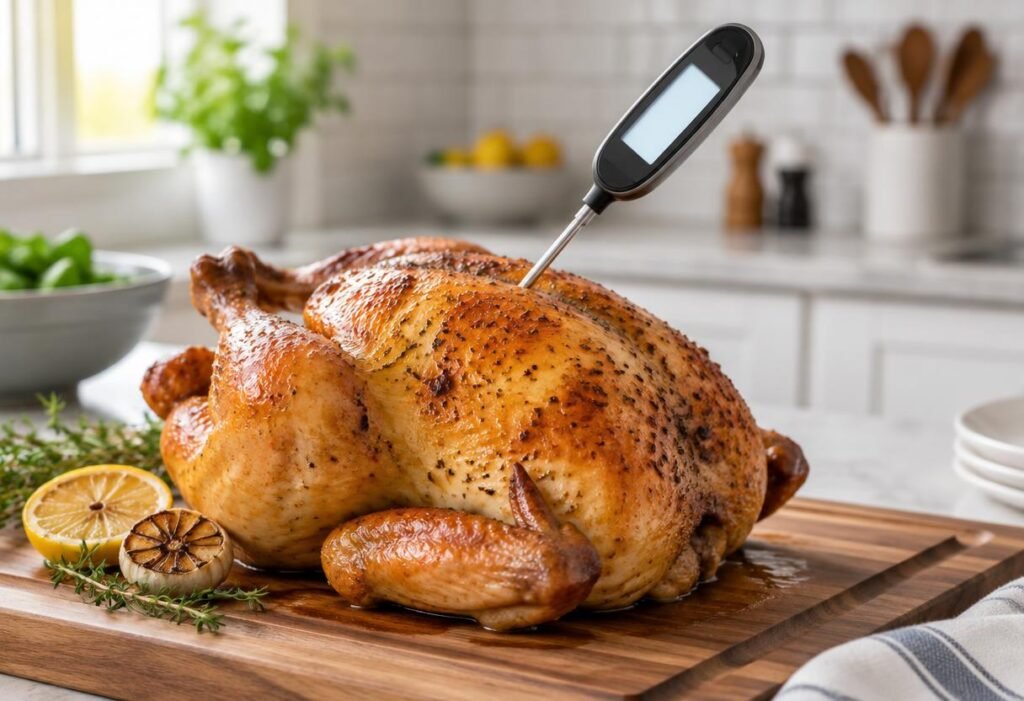
Cutting into meat to check if it’s done lets the juices run out, and guessing by color is unreliable. A meat thermometer removes the guesswork completely. It’s the single best tool for food that’s both safe and juicy. Here’s exactly how to use a meat thermometer, from where to place it to the temperatures you need to hit.
Table of Contents
- Why Color Isn’t a Reliable Test
- How to Use a Meat Thermometer Step by Step
- Safe Internal Temperatures
- Common Mistakes to Avoid
- How to Check Your Thermometer’s Accuracy
- Meat Thermometer FAQ
- Key Takeaways
Why Color Isn’t a Reliable Test
Ground beef can turn brown before it’s safe to eat, and chicken can stay slightly pink even when fully cooked. Color depends on things like the meat’s pH and how it was stored. Internal temperature is the only reliable measure of whether harmful bacteria have been killed, which is why learning how to use a meat thermometer matters so much.
How to Use a Meat Thermometer Step by Step
- Check the meat near the end of cooking. Start testing a few minutes before the recipe says it should be done, so you don’t overshoot.
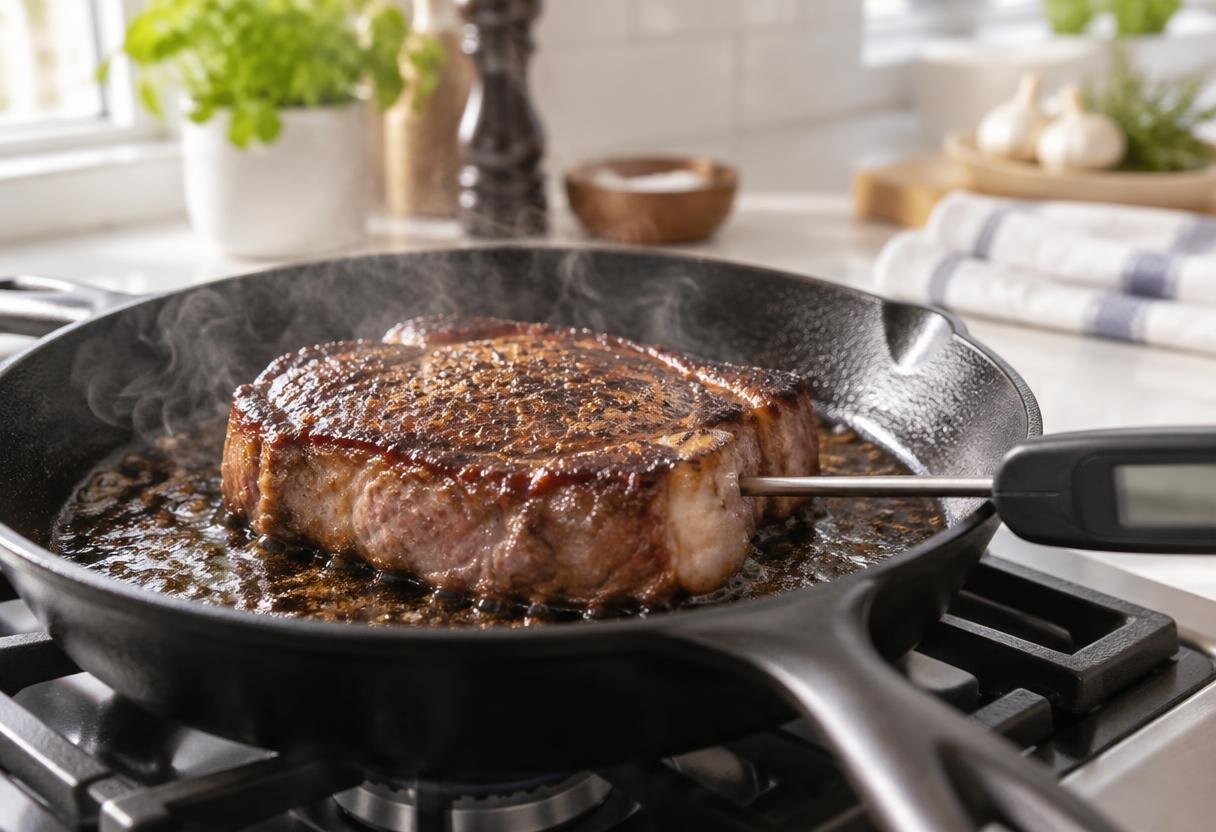
- Insert the probe into the thickest part. This is the last part to finish cooking.
- Avoid bone, fat and gristle. Bone conducts heat and gives a falsely high reading, while fat can read differently from the muscle.
- Go in from the side on thin cuts. For burgers, chops and chicken breasts, insert the probe horizontally so the tip sits in the center.
- Wait for the reading to settle. Instant-read thermometers take a few seconds; dial thermometers can take longer.
- Clean the probe between readings. Wash it with hot, soapy water, especially if you tested raw or undercooked meat.
When it comes to how to use a meat thermometer on whole poultry, check the innermost part of the thigh, the thickest part of the breast and the wing joint. Every spot needs to reach a safe temperature.
Safe Internal Temperatures
These minimum temperatures come from FoodSafety.gov’s safe minimum internal temperature chart:
| Food | Safe Minimum Internal Temperature | Notes |
|---|---|---|
| Chicken, turkey and all poultry (including ground) | 165°F (74°C) | Check the thickest part, away from bone |
| Ground beef, pork, lamb and veal | 160°F (71°C) | Grinding spreads surface bacteria through the meat |
| Beef, pork, veal and lamb steaks, roasts and chops | 145°F (63°C) | Rest for 3 minutes before cutting |
| Fish | 145°F (63°C) | Or until opaque and flaking easily |
| Leftovers and casseroles | 165°F (74°C) | Reheat until hot all the way through |
The rest time matters. Temperature keeps rising slightly after you take meat off the heat, and resting lets the juices settle back into the meat.
Common Mistakes to Avoid
Even people who know how to use a meat thermometer slip up in a few predictable ways:
- Testing too early and too often. Every hole lets juice escape. Wait until the meat is close to done.
- Touching the pan or bone. Both give readings that are too high.
- Measuring only one spot on large cuts. Check two or three places on roasts and whole birds.
- Leaving an instant-read thermometer in the oven. Unless it’s rated as oven-safe, the heat will damage it.
How to Check Your Thermometer’s Accuracy
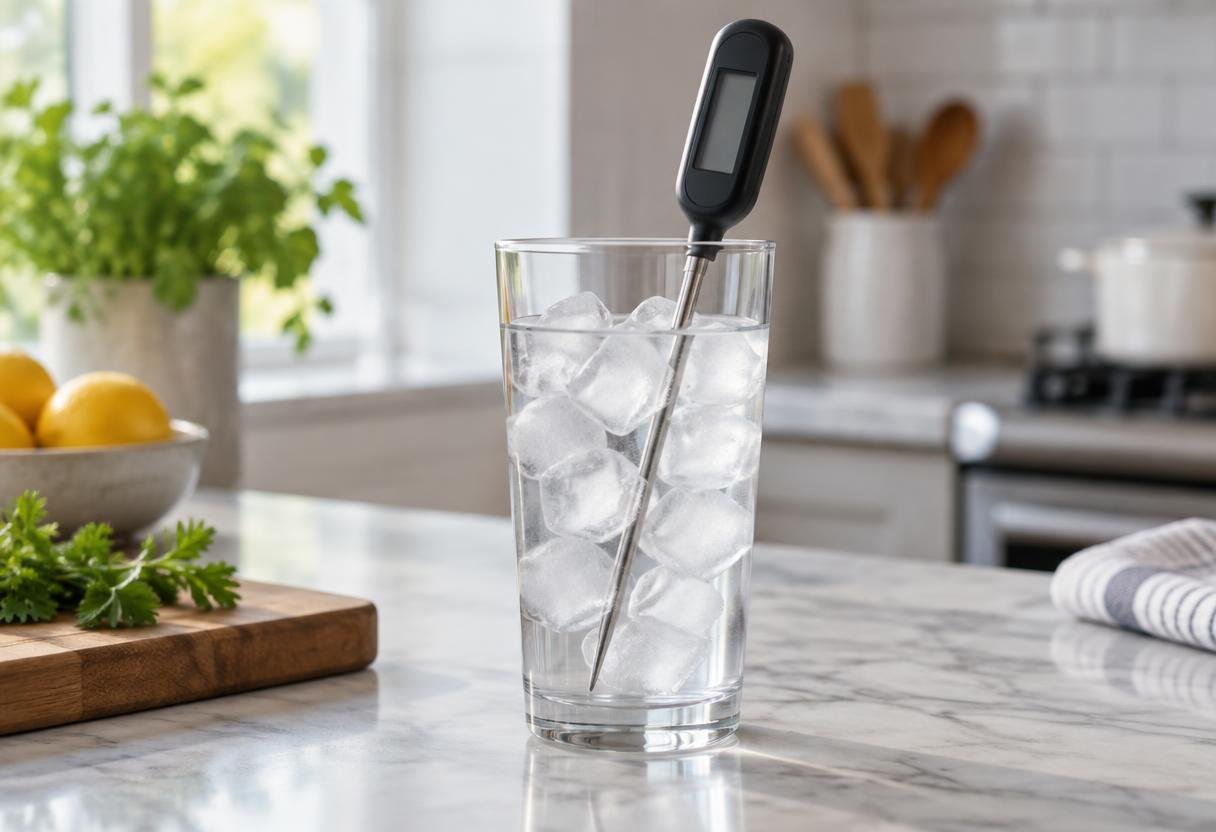
Knowing how to use a meat thermometer only helps if it reads correctly. A thermometer that reads wrong is worse than none at all. Test it every few months with the ice water method:
- Fill a glass with ice, then add cold water and stir.
- Wait a minute, then insert the probe into the center of the glass without touching the sides or bottom.
- It should read 32°F (0°C). If it’s off, recalibrate it following the manufacturer’s instructions, or remember the difference when you cook.
Looking for a reliable instant-read model? Read our ThermoPro TP03 instant-read thermometer review. It’s fast, affordable and easy to read.
Meat Thermometer FAQ
Where do you put a meat thermometer in chicken?
Insert it into the thickest part of the breast or the innermost part of the thigh, without touching bone. It should read 165°F (74°C).
Can I leave a meat thermometer in the oven?
Only if it’s an oven-safe or leave-in probe thermometer. Standard instant-read thermometers are meant for quick checks only.
How long do you leave a thermometer in meat?
Instant-read models usually settle within a few seconds. Dial thermometers can take longer, so wait until the needle stops moving.
Do I need to rest meat after checking the temperature?
Steaks, roasts and chops should rest for 3 minutes after reaching 145°F. It keeps the meat juicier and completes the safe cooking process.
Key Takeaways
Once you know how to use a meat thermometer, you’ll never go back to cutting meat open or guessing by color. Insert it into the thickest part, avoid bone, hit the safe temperature and let it rest. Learning how to use a meat thermometer is the easiest upgrade you can make to your cooking, and your food will be safer and juicier every time.