
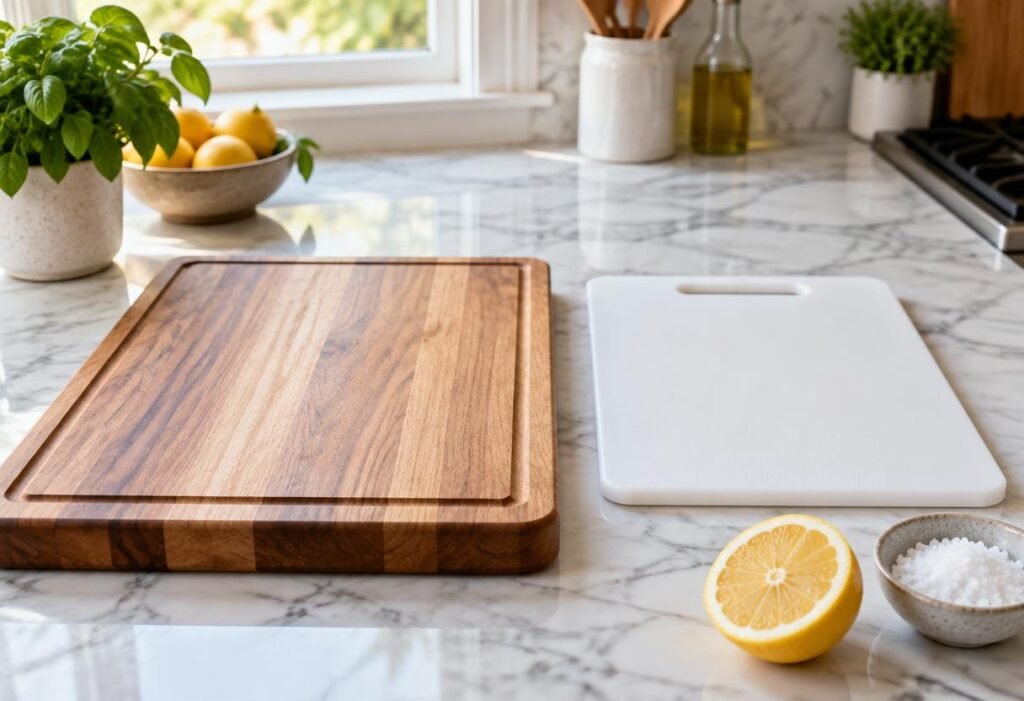
Your cutting board touches almost everything you cook, from raw chicken to the salad you eat uncooked. That makes it one of the most important things in your kitchen to keep clean. Knowing how to clean a cutting board correctly depends on what it’s made of, because wood, bamboo and plastic each need slightly different care. Here’s the complete routine.
Table of Contents
- How to Clean a Cutting Board After Everyday Use
- How to Sanitize After Raw Meat
- Removing Stains and Odors
- Oiling and Caring for Wooden Boards
- When to Replace a Cutting Board
- Quick Care Guide by Board Material
- Cutting Board Questions, Answered
- Wrapping Up
How to Clean a Cutting Board After Everyday Use
For daily cleaning, the basic method is the same for every material:
- Scrape food scraps into the trash or compost with the back of your knife (not the blade edge, which dulls it).
- Scrub both sides with hot water, dish soap and a sponge. Wash both sides even if you only used one, because liquid runs underneath.
- Rinse thoroughly with hot water.
- Dry it with a towel, then stand it upright so air reaches both sides.
That’s how to clean a cutting board after chopping vegetables, bread or fruit. The difference between materials comes down to the dishwasher:
- Plastic boards: most are dishwasher-safe, and the high heat helps sanitize them.
- Wood and bamboo boards: never put them in the dishwasher or leave them soaking in water. They absorb water, swell, warp and crack.
How to Sanitize After Raw Meat
Raw meat, poultry and seafood call for an extra step. First wash the board with hot, soapy water as above, then sanitize it. A widely used home method is a solution of one tablespoon of unscented liquid bleach per gallon of water: flood the surface, let it sit for a few minutes, rinse and air-dry.
Better still, prevent the problem. FoodSafety.gov recommends using one cutting board for raw meat, poultry and seafood, and a separate one for produce and foods that won’t be cooked. Color-coded boards make this easy to stick to.
Removing Stains and Odors
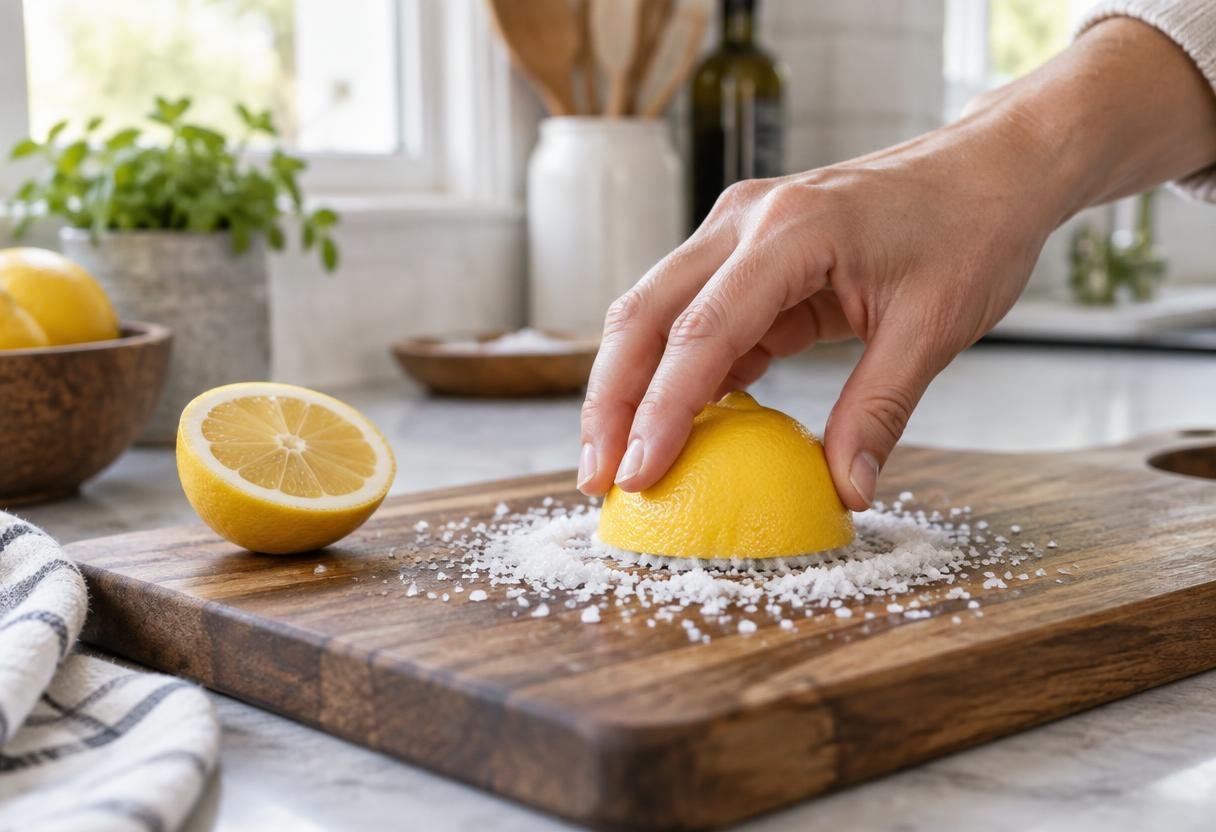
Beets, turmeric, garlic and onions can leave their mark. Here’s how to clean a cutting board that’s stained or smelly without harsh chemicals:
- Salt and lemon: sprinkle coarse salt over the board and scrub it with half a lemon, cut side down. Let it sit for five minutes, then rinse. This works especially well on wood.
- Baking soda paste: mix baking soda with a little water, spread it over the stain, leave it for 10 minutes, scrub and rinse.
- White vinegar: wipe the board with undiluted white vinegar to neutralize lingering smells, then rinse.
Oiling and Caring for Wooden Boards
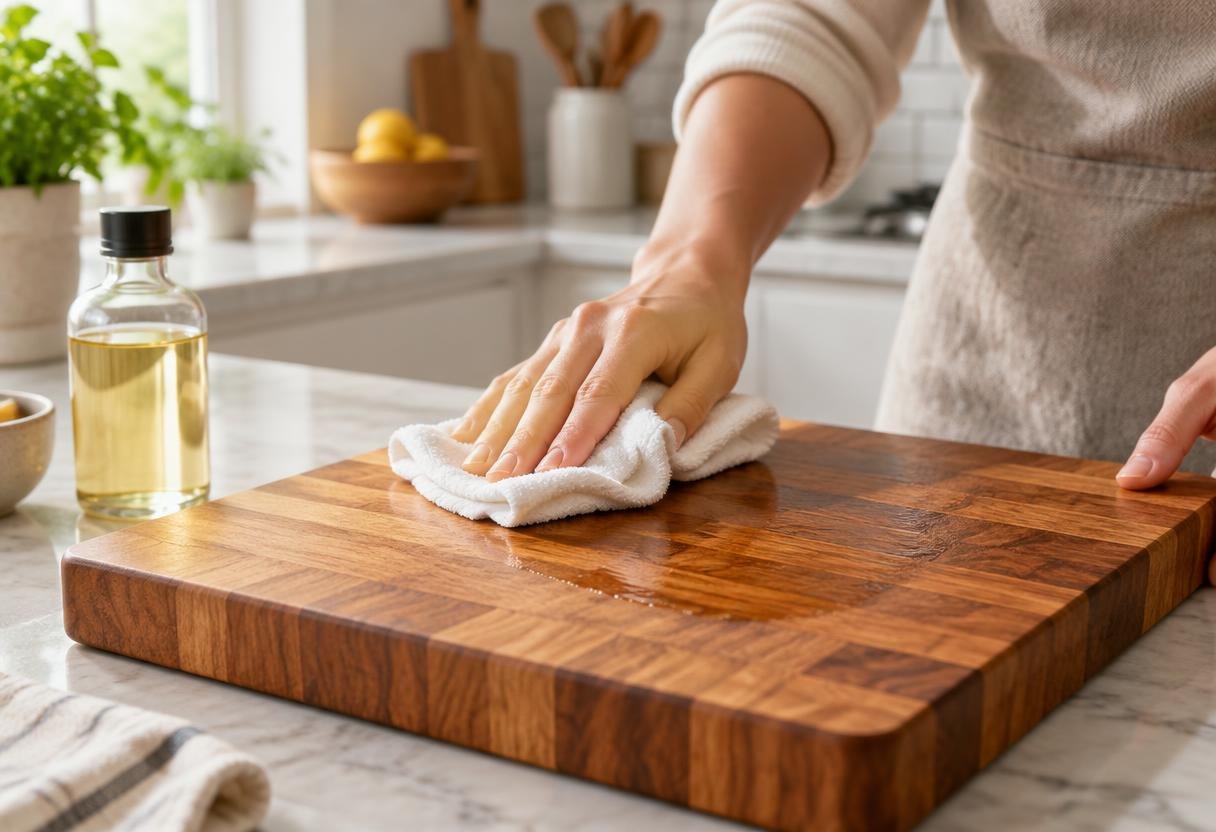
Learning how to clean a cutting board made of wood also means learning to oil it. Oil keeps the wood from drying out and helps it resist stains and water. Every few weeks, or whenever the board looks pale and dry:
- Make sure the board is clean and completely dry.
- Apply a generous coat of food-grade mineral oil or board cream with a cloth.
- Let it soak in for several hours or overnight.
- Wipe off any excess the next morning.
Avoid vegetable and olive oils for this. They can turn rancid and leave a sticky, smelly film.
When to Replace a Cutting Board
Even if you know exactly how to clean a cutting board, boards eventually wear out. Replace plastic boards when they develop deep knife grooves that are hard to clean, and replace wooden boards with large cracks. Grooves and cracks trap moisture and food, which no amount of scrubbing fully fixes.
If yours is due for retirement, our roundup of the best cutting board under $20 covers easy-to-clean options. A sharp knife also helps, since dull blades crush and gouge the surface. See our best kitchen knife under $20 picks.
Quick Care Guide by Board Material
Each board material needs slightly different care. Here’s how the most common types compare:
| Board | Everyday Cleaning | Dishwasher? | Ongoing Care |
|---|---|---|---|
| Plastic | Hot, soapy water and a scrub brush | Usually yes (check the label) | Replace when deep knife grooves build up |
| Wood | Hot, soapy water, then dry upright | No | Rub with food-safe mineral oil regularly |
| Bamboo | Hot, soapy water, then dry upright | No | Oil occasionally to prevent cracking |
| Composite | Hot, soapy water | Often yes (check the label) | Very little; follow the maker’s guidance |
Cutting Board Questions, Answered
Is wood or plastic more hygienic?
Both are safe when cleaned properly. Plastic can go in the dishwasher, while wood is gentler on knives but needs hand washing and oiling.
Can I clean a wooden cutting board with bleach?
Yes, a diluted bleach solution can be used occasionally after raw meat, but rinse well and dry it upright. Frequent bleaching can dry out the wood, so re-oil it afterward.
How do I dry a cutting board properly?
Towel it off, then stand it on its edge or in a dish rack so air circulates on both sides. Drying it flat traps moisture underneath and can cause warping.
How often should I oil a wooden board?
Roughly once a month for a board in regular use, or whenever the surface looks dry and faded.
Wrapping Up
Now you know how to clean a cutting board of any type: scrape, wash both sides with hot soapy water, sanitize after raw meat, and dry it upright. Add a monthly oiling for wood, and your board will stay safe, smell fresh and last for years. Mastering how to clean a cutting board is one of the simplest food safety habits you can build.