
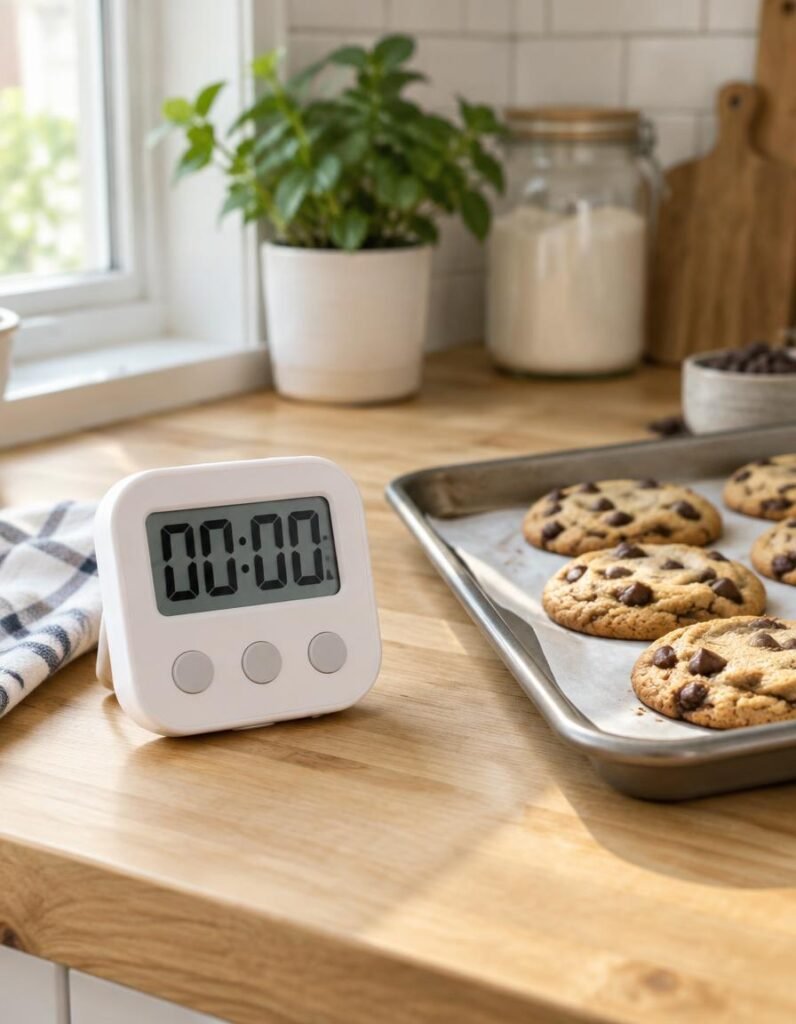
Burnt cookies, rubbery eggs and pasta boiled to mush usually have the same cause: a timer that was too quiet, too fiddly or not there at all. Knowing how to choose a kitchen timer comes down to a handful of features that make the difference between a gadget you rely on every day and one that ends up in a drawer. This guide walks through each one, what to skip, and how to match a timer to the way you actually cook.
Table of Contents
- Why a Dedicated Timer Beats Your Phone
- Digital or Mechanical?
- How to Choose a Kitchen Timer: 6 Features That Matter
- Single-Event or Multiple-Event Timers
- What to Avoid
- Our Pick for Most Kitchens
- Frequently Asked Questions
- Final Thoughts
Why a Dedicated Timer Beats Your Phone
Your phone, oven and microwave all have timers, so why buy another? Because a dedicated timer is always visible, always within earshot and never buried under notifications. You can carry it to the next room, stick it on the fridge at eye level, and set it with floury hands without smearing your screen. It also does one job, so there is no app to open and nothing to distract you mid-recipe.
Digital or Mechanical?
The first decision when learning how to choose a kitchen timer is the type. Digital timers are more precise, easier to read from a distance, usually louder, and can be set to the second. Mechanical wind-up timers never need batteries and show remaining time at a glance on the dial, but they are less precise, often tick the whole time, and usually stop at 60 minutes.
For most home cooks, digital is the better choice. A mechanical timer still makes sense as a backup, or if you simply hate replacing batteries.
How to Choose a Kitchen Timer: 6 Features That Matter
1. A Loud, Adjustable Alarm
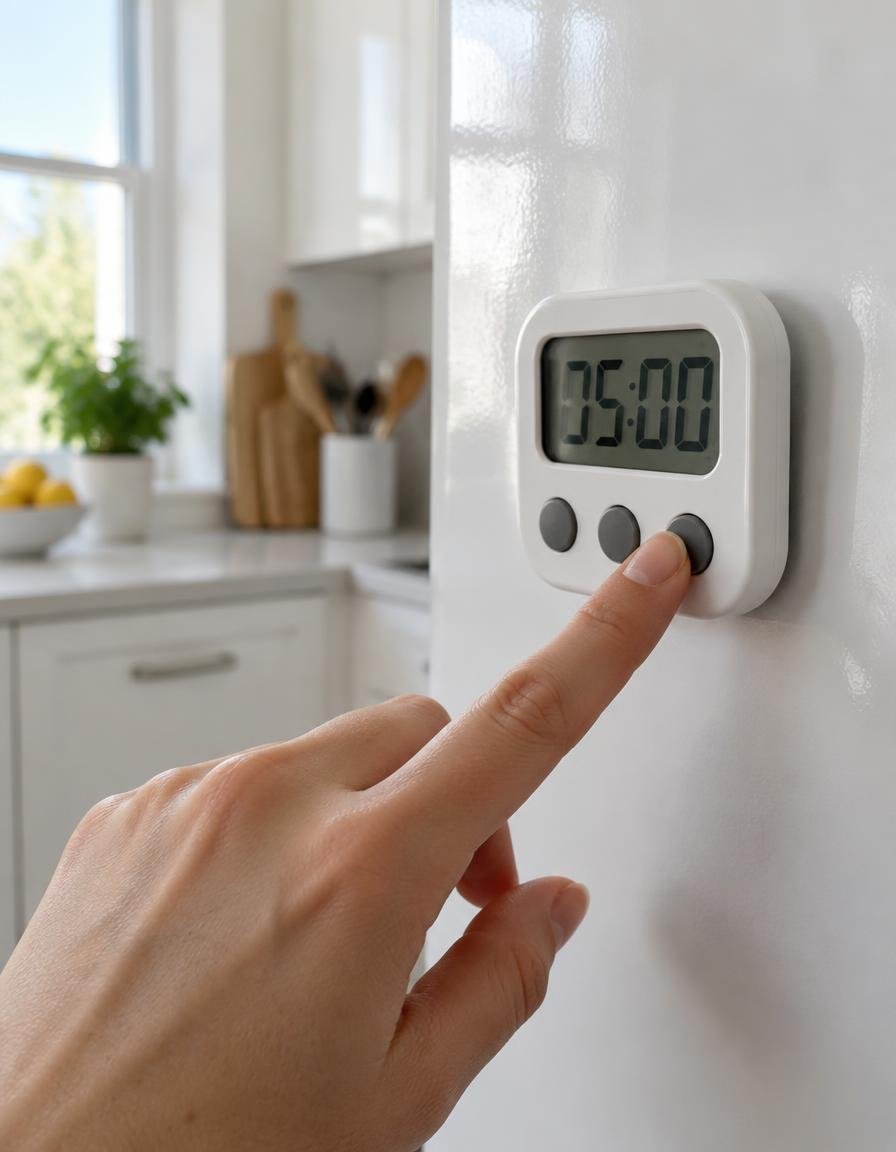
If you can’t hear it from the next room, it isn’t doing its job. Look for at least two volume levels so you can turn it up over a noisy extractor fan or down for a quiet early morning. A flashing screen or light is a big bonus in a loud kitchen, and essential for anyone hard of hearing.
2. A Big, Easy-to-Read Display
Large digits you can read from across the room matter more than any extra feature. A tilted screen or kickstand helps too, because you are usually looking down at the counter rather than straight at the timer.
3. Seconds and Long Durations
You need to set seconds for soft-boiled eggs, and you need hours for braises, slow roasts and bread proofing. A timer that only goes up to 60 or 99 minutes will let you down on weekend cooking projects.
4. Count-Up After Time Runs Out
The best timers keep counting after they hit zero, so you know exactly how long your brownies overbaked or your dough overproofed. It’s a small feature that saves a lot of guessing.
5. Simple Controls
A rotary dial or full number keypad is the fastest to set. Timers with separate hour, minute and second buttons work fine but take longer. Avoid models where one tiny button does several jobs, because they’re easy to clear by accident.
6. Smart Placement Options
A strong magnetic back, a fold-out stand and a hanging loop let you put the timer where you’ll actually see it. Splash resistance is worth having too, since timers live right next to the sink and stove.
Single-Event or Multiple-Event Timers
Part of knowing how to choose a kitchen timer is being honest about how you cook. If you usually time one thing at once, a simple single-event timer is easier to use and harder to mess up. If you regularly juggle a roast, a side and a dessert, a dual or triple timer that shows every countdown on one screen is worth the extra buttons. Look for one that gives each countdown its own beep pattern so you know which dish is ready.
According to America’s Test Kitchen’s kitchen timer testing, accuracy is rarely the problem with modern timers. The real differences are how easy they are to read, hear and set.
What to Avoid
Knowing how to choose a kitchen timer also means knowing which red flags to walk away from:
- Tiny buttons and cramped screens: hard to use with wet or floury hands.
- Short maximum times: anything that stops at an hour won’t cover slow cooking.
- No seconds setting: too imprecise for eggs, blanching and quick-cooking recipes.
- Weak magnets: a timer that slides down the fridge door ends up on the floor.
Our Pick for Most Kitchens
Now that you know how to choose a kitchen timer, our favorite budget option is the VOCOO Digital Kitchen Timer. It has a twist-to-set dial, a large bright display, a strong magnet and a loud adjustable alarm, and it counts up as well as down. We compare it with dual, wind-up and two-pack alternatives in our full guide to the best kitchen timer under $20.
A good timer pairs perfectly with a reliable thermometer. See our guide on how to use a meat thermometer so your timing and doneness are both spot on, or start with our kitchen setup guide for beginners if you’re building a kitchen from scratch.
Frequently Asked Questions
Is a digital or mechanical kitchen timer better? Digital is better for most people. It’s more precise, easier to read and can be set to the second. Mechanical timers are a good battery-free backup.
How loud should a kitchen timer be? Loud enough to hear from another room with the extractor fan running. Adjustable volume is ideal, so you can turn it down when you don’t need it blaring.
Do I need a timer that runs more than one countdown? Only if you often cook several dishes at once. For one-thing-at-a-time cooking, a single-event timer is simpler.
What’s the most important thing when learning how to choose a kitchen timer? Pick one you can hear and read easily from across the room. Every other feature is secondary.
Final Thoughts
How to choose a kitchen timer really comes down to three questions: can you hear it, can you read it, and can you set it quickly? Get those right, add seconds, long durations and count-up mode, and you’ll have a timer that quietly saves dinner for years. Whatever you buy, keep it where you can see it.
Note: Prices on Amazon change often. Always check the current price before buying to make sure it still fits your budget.
Disclosure: dailykitchenpicks.com is a participant in the Amazon Services LLC Associates Program, an affiliate advertising program designed to provide a means for sites to earn advertising fees by advertising and linking to Amazon.com. This means we may earn a small commission if you purchase through our links, at no extra cost to you.